What Is SEO Marketing: A Practical Guide for Lead Generation, AI, and Social Media
Learn what is SEO marketing, how it drives leads, integrates with AI chat agents, social media, and paid ads. Timeline, budgets, checklists, and tools included.
Search engines still drive the majority of long-term, high-intent traffic to websites. If you want predictable leads, lower customer acquisition cost, and a scalable way to win trust, understanding what is SEO marketing is essential. This guide explains the fundamentals, the three main pillars, real timelines, budget ranges, and how SEO ties into AI chat agents, social media automation, and paid ads on Meta and TikTok.
What is SEO Marketing?

SEO marketing is the practice of improving a website so it ranks higher in search engine results pages for queries your potential customers use. It combines content strategy, technical work, and off-site reputation building to increase organic visibility. Unlike paid ads, SEO focuses on earning traffic through relevance and authority. The outcome is consistent, compounding traffic that often converts at a higher rate because searchers express intent.
Key points in plain terms:
SEO creates content and technical structures so search engines can find and recommend your pages.
Good SEO aligns with user intent, not just keyword lists.
It is a long-term investment that reduces dependency on paid channels over time.
How SEO Differs from SEM and Paid Ads
Search engine marketing includes both organic SEO and paid search advertising. The main difference is cost per click and longevity. Paid ads provide immediate visibility for a budget. SEO takes longer but delivers lasting results and compounding returns. For many businesses the optimal approach is a mix: use paid ads to capture early demand while SEO builds a steady organic channel.
If you run performance ads on Meta or TikTok, think of SEO as the foundation that reduces your long-term ad spend and improves landing page quality scores. For playbooks on combining automation with paid channels, see our resource on Paid Ads Management.
The Three Pillars of SEO Marketing
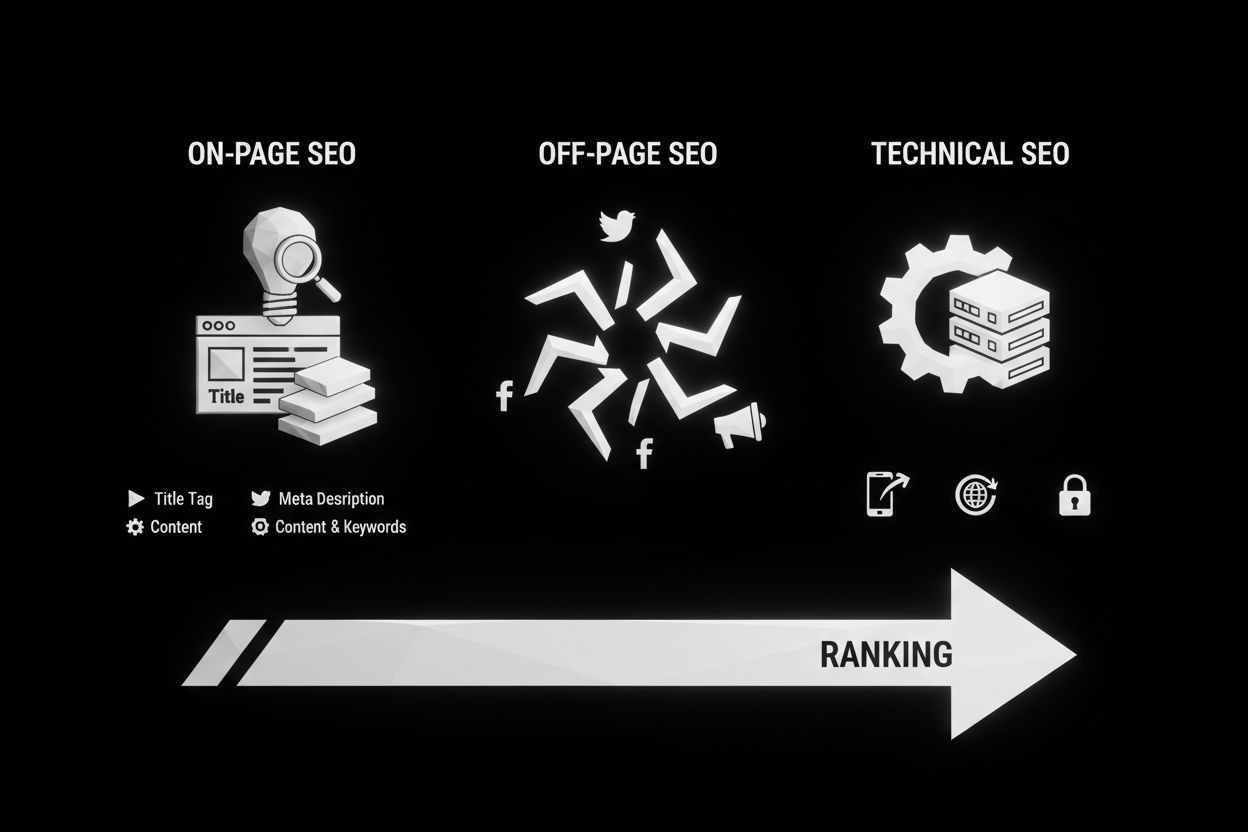
A practical way to organize SEO work is by these three pillars.
On-Page SEO
On-page SEO ensures each page answers searcher intent and uses elements search engines read.
Content strategy: create pages focused on user needs. Use topic clusters and pillar pages.
Keyword research: target keywords with realistic competition and clear intent.
HTML elements: title tags, meta descriptions, headings, and schema markup.
Content quality: aim for depth, E-E-A-T signals, original examples, and user value.
Actionable tip: For each page create a simple one-page brief that lists target keyword, search intent, main points to cover, internal links, and a call to action.
Off-Page SEO
Off-page SEO builds your site reputation and authority.
Backlinks: earn links from relevant, authoritative sites.
Digital PR: create linkable assets like research, tools, or case studies.
Social signals: shares and engagement can amplify discoverability.
Reviews and profiles: local businesses should optimize Google Business Profile and directories.
Actionable tip: Plan one outreach campaign per quarter aimed at earning 3 to 10 high-quality links via guest posts, partnerships, or original research.
Technical SEO
Technical SEO ensures search engines can crawl, index, and render your site.
Site speed and Core Web Vitals.
Mobile-first design and responsive layouts.
SSL and secure site architecture.
Structured data and XML sitemaps.
Canonicalization and proper redirects.
Common tech issues to fix first: broken links, duplicate content, slow images, and missing meta robots tags.
For automated technical optimizations and site health monitoring consider our Automated SEO service.
Understanding How Search Engines Work
Search engines use three main steps: crawling, indexing, and ranking.
Crawling: bots discover pages through links and sitemaps.
Indexing: content is analyzed and stored in the search engine index.
Ranking: algorithms evaluate relevance and authority for each query.
Practical point: Use Google Search Console and server logs to understand crawl frequency and indexing issues. If pages are not indexed within a few weeks, there is usually a technical problem or a quality signal blocking them.
How to Start SEO Marketing - Tactical Roadmap
This section gives a practical sequence you can follow in the first 90 days.
0-30 Days - Audit and Quick Wins
Run a full site audit for technical issues using free tools and an audit checklist.
Fix high-impact technical issues like broken pages, redirect loops, and slow server responses.
Identify 5 to 10 pages with high impressions but low clicks and optimize titles and meta descriptions.
Publish or refresh 3 cornerstone pages targeting low-competition keywords.
30-90 Days - Content and Link Building
Execute a content calendar focused on buyer journey and search intent.
Start one link-building campaign and one digital PR campaign.
Add schema markup for key content types like articles and products.
Integrate AI tools to accelerate content ideation but always edit for original insight and voice.
90-180 Days - Scale and Measure
Expand topic clusters, add supporting content, and improve internal linking.
Track keyword movement and conversion rates, not just rankings.
Test landing pages with paid traffic to validate copy and UX, then apply learnings to organic pages.
How Long Does SEO Take to Work?
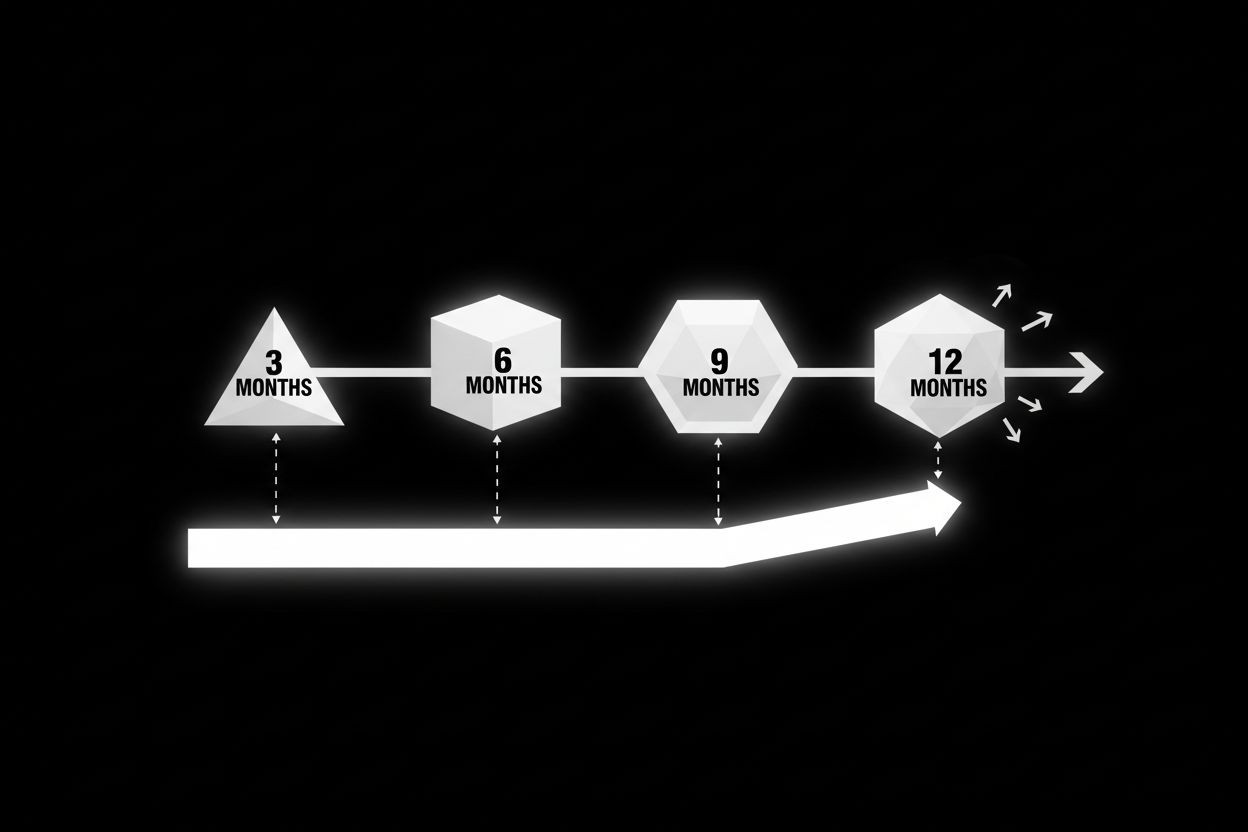
Expectations matter. For most websites you will see initial improvements in 3 to 6 months and meaningful gains in 6 to 12 months. Highly competitive sectors may take 12 to 24 months to reach top positions.
Factors that influence timing:
Domain authority and backlink profile at start.
Competition for your target keywords.
Quality and frequency of content production.
Technical health of the site.
Resources and budget dedicated to SEO.
Quick wins often come from optimizing existing pages and title tags. Long-term wins come from a steady stream of helpful content and quality backlinks.
Budget and Team Planning
SEO can be done in-house, with freelancers, or via an agency. Costs vary widely.
Approximate monthly budget ranges:
Small business DIY: $300 to $1,000 for tools and occasional freelance help.
In-house team: $5,000 to $20,000 including salaries for content, SEO, and developer time.
Agency: $2,000 to $15,000 monthly depending on scope.
Recommended roles for a medium-growth team:
SEO strategist or manager.
Content writer and editor.
Technical developer with SEO experience.
Outreach or PR specialist.
For automated lead workflows and aligning SEO with sales, see our Automated Lead Generation offering.
Industry-Specific SEO Notes
E-commerce: focus on product schema, faceted navigation, canonical tags, and conversion-optimized product pages.
Local businesses: optimize Google Business Profile, local citations, and localized content.
B2B: prioritize long-form content, case studies, and gated assets for lead capture.
Service businesses: optimize service pages by intent, include pricing where possible, and collect reviews.
If you run social campaigns or automated content on platforms, coordinate themes between social and SEO. Automated social posting can amplify organic content and drive referral traffic. Learn more about automation in Automated Social Media.
Common SEO Mistakes and How to Avoid Them
Keyword stuffing and thin content. Focus on value and intent.
Buying low-quality links. Prioritize relevance and editorial links.
Ignoring technical errors like crawl blockers and duplicate pages.
Treating SEO as a one-time project. It is ongoing.
Relying solely on AI to produce final copy. Use AI for research and drafts, then add real expertise and examples.
Penalty recovery steps:
Identify the violation in Search Console.
Remove or disavow problematic links and fix content issues.
Submit a reconsideration or resubmit sitemaps after fixes.
SEO and AI Chat Agents - A Powerful Combo
AI chat agents change how visitors interact with SEO content. When combined, they improve lead capture and on-site engagement.
Practical ideas:
Use an AI chat agent to surface pages based on conversational queries. This reduces bounce rate and increases conversions.
Feed common search queries into the chat agent to craft better content and FAQ sections.
Capture leads directly in chat and push them into CRM workflows.
If you want to implement AI chat agents that work with organic traffic see our Automated AI Chat Agents service.
Measuring SEO Success
Key metrics to track:
Organic sessions and users.
Keyword rankings for priority terms.
Click-through rate from SERPs.
Conversion rate and assisted conversions from organic traffic.
Backlink growth and referring domains.
Tools to use: Google Analytics, Google Search Console, and at least one paid tool like Ahrefs or SEMrush for competitive analysis.
Pro tip: Focus on revenue or leads attributed to organic rather than just traffic. Tie pages to funnel stages and track downstream sales.
Tools and Tool Stack Recommendations
Budget-friendly stack:
Free: Google Search Console, Google Analytics, Lighthouse.
Low-cost: Ubersuggest or Keywords Everywhere for keyword ideas.
Mid/Enterprise: Ahrefs, SEMrush, or Moz for deeper research.
Content: SurferSEO or Clearscope to align content with intent.
Outreach: BuzzStream or Pitchbox for link campaigns.
Choose tools based on your team size and budget. For many small teams a combination of free Google tools plus one paid research tool is sufficient.
The Future of SEO: Trends to Watch
AI-generated content will be common. The winning content will include original experience and unique data.
Zero-click results will grow, so optimize for featured snippets and People Also Ask.
Voice and visual search will change query formats and metadata priorities.
Integrated marketing will matter more. SEO, social, email, and paid must work together for consistent messaging.
For integrating SEO with paid ads and social campaigns, our Paid Ads Management team often runs tests to inform organic content strategy.
30-Day SEO Action Checklist
Run a technical audit and fix top 10 issues.
Identify 10 target keywords and map them to pages.
Optimize titles and meta descriptions for pages with high impressions.
Publish or refresh 3 quality pages using a content brief template.
Set up automated monitoring in Search Console and weekly ranking checks.
SEO Marketing FAQ
What is the single most important thing in SEO?
Relevance to user intent combined with credible authority signals. Create content that directly answers what users search for and back it with evidence and links.
Can I rely only on paid ads instead of SEO?
Paid ads are great for immediate demand. SEO builds sustainable organic traffic that lowers long-term acquisition costs. Most growth strategies use both.
How much should I spend on SEO?
Start with a budget that supports consistent monthly content and at least occasional technical fixes. For many small companies $1,000 to $3,000 per month is a reasonable starting point.
Will AI replace SEO writers?
AI will assist with research and drafts, but human expertise, editing, and original insights remain essential for ranking and trust.
How do social media and SEO work together?
Social channels amplify content, drive referral traffic, and help content get discovered by publishers who might link back. Use social to test headlines and topics.
Conclusion and Next Steps
SEO marketing is not a single tactic. It is a coordinated set of activities that build visibility and credibility over time. Start with a realistic timeline, allocate a modest recurring budget, and measure what matters: leads and revenue from organic channels. If you want help implementing an integrated approach that combines SEO with AI chat agents, social automation, and paid ads, our services can accelerate results. Learn more about our Automated SEO work or contact us to discuss a tailored plan.
Last updated: 2026-01-04
For immediate help or a quick audit request reach out through our contact page.
Article created using Lovarank