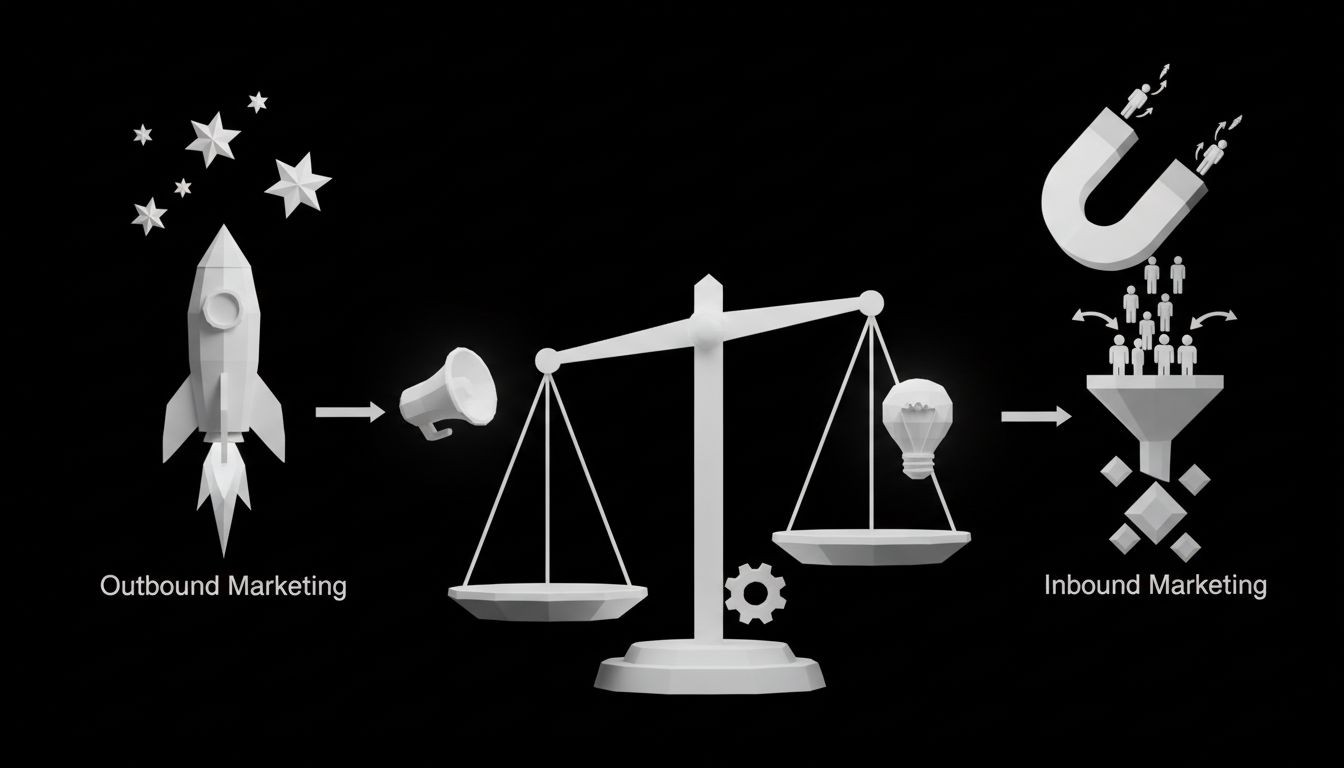
Outbound Marketing vs Inbound Marketing: Which Strategy Wins for Lead Generation?
Compare outbound marketing vs inbound marketing, see where each works best, and build a smarter lead generation mix with SEO, ads, and AI follow-up today.
If you are choosing between outbound marketing vs inbound marketing, the real question is not which one is better in a vacuum. It is which one matches how your buyers behave and how quickly you need pipeline. Gartner says 61% of B2B buyers prefer a rep-free buying experience and 73% actively avoid irrelevant outreach, which explains why generic blasting is getting harder to justify. Salesforce also notes that inbound and outbound often work best together, not as rivals. (gartner.com)
What inbound marketing actually does well

Inbound marketing is built to attract people who are already looking for answers. HubSpot describes it as attracting, engaging, and delighting customers through valuable content and relationship-building, and that still holds up in the AI era. The practical version is simple: create useful pages, rank for intent, answer questions clearly, then keep the conversation going with email and social. (hubspot.com)
For B2B teams, inbound usually starts with search and content. CMI’s 2025 research says SEM/PPC produced the best results among paid channels for content marketing, while LinkedIn remained the social platform that delivered the best value for 85% of respondents. That is why SEO, organic social, webinars, and email nurture work so well together. (contentmarketinginstitute.com)
Common inbound channels
SEO and topic clusters
Blog posts and guides
Lead magnets
Webinars and workshops
Organic social content
Email nurture
AI chat agents for instant qualification
If SEO is the core of your pipeline, Automated SEO helps turn search intent into qualified visits. If distribution is the bottleneck, Automated Social Media can keep your content active without constant manual posting.
Strengths of inbound marketing
Builds trust before the first sales conversation
Improves lead quality over time
Creates compounding traffic assets
Supports education-heavy or high-consideration sales
Feeds remarketing and nurture campaigns
Weaknesses of inbound marketing
Takes time to gain traction
Requires consistency across content, search, and follow-up
Can stall if content is useful but not aligned with buyer intent
Needs a conversion system, not just traffic
Inbound works best when you can capture intent, sort it quickly, and follow up while interest is high. A strong article or webinar is only the first half of the job. The second half is converting that attention into a booked call, demo, or quote.
What outbound marketing actually does well

Outbound marketing is any marketing method that proactively starts a conversation. Salesforce describes it as push marketing, with examples like TV and radio, billboards, direct mail, cold calling, digital banner ads, and paid social. In digital form, outbound is often the fastest way to get in front of a defined audience, especially when you need reach now rather than next quarter. (salesforce.com)
Google Ads says lead-generation campaigns are designed around conversions and traffic, and its Search Network places ads on Google search results when people search for keywords you choose. Meta’s lead ads can collect contact information directly inside Facebook or Instagram, and its click-to-message and call formats keep the conversation in one place. TikTok also offers a Lead Generation objective and publishes success stories for registration and lead campaigns. (support.google.com)
Meta says more than 1 billion instant forms were submitted in 2023, which shows how common in-app lead capture has become. That matters because the best outbound offers remove friction. When someone is interested, the form, call, or message thread should be simple enough that they do not think twice. (facebook.com)
Common outbound channels
Paid search
Paid social
Display ads
Cold email
Outbound calling
Events and sponsorships
Direct mail
Retargeting
If you are spending on Meta, Google, or TikTok, Paid Ads Management helps connect creative, targeting, and conversion tracking so the spend has a clear payoff.
Strengths of outbound marketing
Faster to launch
Easier to scale with budget
Good for promotion, launches, and offers with a deadline
Useful for testing messages and audiences quickly
Can create demand in markets that do not know you yet
Weaknesses of outbound marketing
Can feel intrusive when targeting is weak
Usually costs more at the top of the funnel
Performance drops if the audience is too broad
Lead quality can be uneven without qualification
Creative fatigue shows up quickly on paid social
Outbound is not outdated. It is just less forgiving than it used to be. The more crowded the feed, inbox, and search results page become, the more important targeting, creative, and follow-up become.
Outbound marketing vs inbound marketing: side-by-side comparison
Here is the simplest way to compare the two.
Factor | Inbound marketing | Outbound marketing |
|---|---|---|
Core motion | Pulls people in with helpful content | Pushes a message to a targeted audience |
Speed | Slower to ramp, stronger over time | Faster to launch and test |
Buyer intent | Best when people are already searching | Best when you need to create attention |
Best channels | SEO, content, organic social, email nurture | Paid search, paid social, calling, display, events |
Cost pattern | Higher upfront effort, lower marginal cost over time | Ongoing spend tied to reach and clicks |
Lead quality | Often higher because intent is self-selected | Depends heavily on targeting and qualification |
Best use case | Trust, education, authority | Awareness, launches, direct response |
The real difference is not just pull versus push. Inbound builds a relationship before the hand raise. Outbound buys speed, visibility, and test volume. Most teams need both, but they do not need both in the same proportion.
Which one is better for lead generation?
For lead generation, inbound usually wins when the buying decision is complex, the sales cycle is longer, or the customer wants to research privately first. Gartner’s research on B2B buying behavior is a strong reminder that many buyers want self-service and dislike irrelevant outreach, which makes search, educational content, and nurture a strong foundation for pipeline. (gartner.com)
Outbound usually wins when speed matters, when you are launching a new offer, or when your audience does not yet know they have a problem. Google Search ads, Meta lead ads, and TikTok lead generation campaigns are useful here because they let you put an offer in front of people quickly and measure response without waiting for organic momentum. (support.google.com)
A simple rule helps:
If people are already looking for the solution, lean inbound.
If people need to be shown the problem or the offer, lean outbound.
If you need leads this month and next quarter, combine both.
That is also where Automated AI Chat Agents can make a difference. When inbound traffic or outbound clicks arrive, an instant chat layer can qualify the lead, answer common objections, and route serious prospects to the right next step without delay.
How to choose the right mix for your business
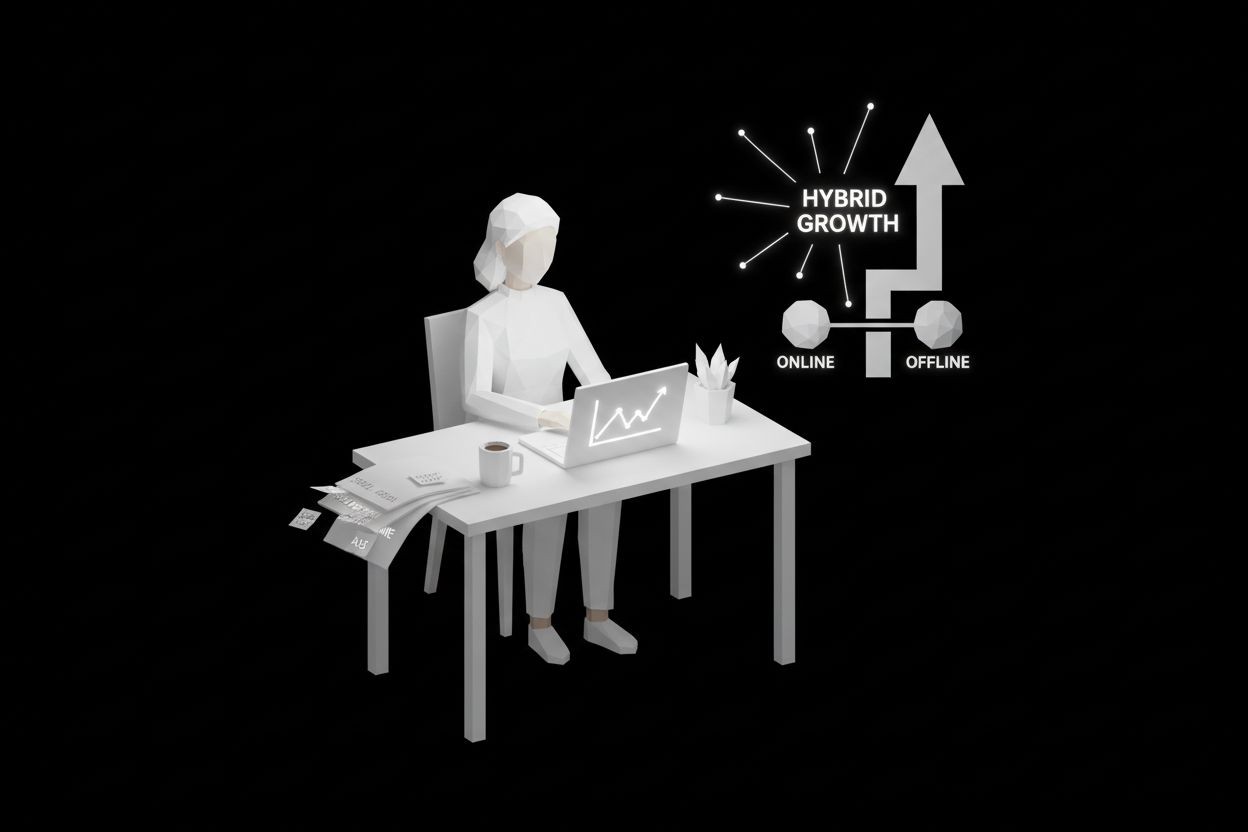
The best choice depends on five things: budget, sales cycle, audience intent, product complexity, and your team’s capacity to follow up. If one of those is weak, the entire strategy feels expensive.
Use more inbound when:
Your buyers research before they talk to sales
Your product needs explanation or education
You want lower-cost traffic over time
You can publish consistently
You have a strong CRM and nurture process
Use more outbound when:
You need quick lead flow
You are entering a new market
You have a time-sensitive campaign
Your offer is easy to explain in one or two lines
You can afford to test multiple creatives and audiences
Use a hybrid when:
You want pipeline now and compounding growth later
Your sales team needs both self-serve leads and booked meetings
You run paid social or search while also building SEO
You need remarketing to support content and event campaigns
If organic growth is part of your plan, the rest of your system should support it. If social is part of your mix, Automated Social Media helps distribution stay consistent. If you need the full operating system behind that blend, the Lead Generation and Marketing Automation Guide for 2026 Success shows how to connect content, ads, CRM, and follow-up into one process.
KPI and measurement framework
The easiest way to compare outbound marketing vs inbound marketing is by looking at what each one does to your numbers. Google Ads recommends tracking conversions, cost per conversion, and conversion rate, which is a good starting point for paid campaigns. From there, add CAC, LTV, MQLs, SQLs, booked meetings, and revenue by channel. (support.google.com)
A practical scorecard looks like this:
Inbound KPIs: organic traffic, rankings, time on page, lead conversion rate, MQLs, assisted conversions, CAC trend
Outbound KPIs: CTR, CPC, CPL, conversion rate, cost per booked meeting, reply rate, meeting rate, revenue per campaign
Shared KPIs: CAC, payback period, pipeline velocity, close rate, and LTV to CAC ratio
Do not judge inbound by traffic alone. Do not judge outbound by click volume alone. If the leads are not turning into conversations and sales opportunities, the channel is not really working, no matter how good the vanity metric looks.
Common mistakes that hurt both strategies
Treating inbound as just blogging without a conversion path
Running outbound with one generic message for everyone
Sending traffic to a page that does not match the ad or content
Ignoring lead scoring and qualification
Not following up fast enough
Measuring the wrong metrics
Forgetting that creative fatigue is real on paid social
Letting good content die because nobody distributes it
One of the fastest fixes is to align your content, ads, and automation around the same offer. When that happens, your landing page, follow-up email, retargeting ad, and sales message all reinforce each other instead of competing.
FAQ
Is inbound marketing better than outbound marketing?
Not always. Inbound is usually better for trust and compounding growth, while outbound is better for speed and immediate reach. Salesforce also points out that both approaches may be necessary to find new customers and nurture existing ones. (salesforce.com)
Which is cheaper?
Inbound often becomes cheaper over time because content can keep generating leads after it is published, but it has real creation and distribution costs. CMI notes that many marketers undercount content ROI because they forget to include the full cost of creating and distributing content. (contentmarketinginstitute.com)
Is paid advertising outbound marketing?
Usually yes. Salesforce lists digital banner ads, paid social media campaigns, and even digital search ads in its outbound examples, although those channels can absolutely support inbound goals when they promote useful content or a strong offer. (salesforce.com)
Can small businesses use both?
Yes, and they usually should. Small teams often get the best result by using inbound to create credibility and outbound to speed up demand in the short term.
Where do AI chat agents fit?
They sit right in the middle. AI chat agents help inbound leads get answers faster, and they help outbound traffic convert more smoothly once someone clicks.
The smart answer is usually both
The old debate makes it sound like you must pick one camp. In reality, the strongest growth systems combine inbound marketing for trust and demand creation with outbound marketing for speed, testing, and scale. That is true whether you are running Google search ads, Meta lead forms, TikTok campaigns, SEO content, or social media in a single funnel. The teams that win are the ones that connect those channels to fast follow-up, clean qualification, and a clear next step. (support.google.com)
If you want a practical operating model for that mix, the Lead Generation and Marketing Automation Guide for 2026 Success is a solid next step. It helps you turn attention into conversations, conversations into qualified leads, and qualified leads into revenue.