Leads Generated Meaning: A Clear Guide to Marketing, Sales, and Reporting
Learn the leads generated meaning, how to measure it, and how it differs from MQLs, SQLs, conversions, and customers across ads, SEO, CRM, and social media channels.
If you are trying to understand leads generated meaning, the short answer is simple: it is the number of new prospects captured during a specific period. In most marketing reports, those prospects are people who filled out a form, clicked to call, started a chat, sent a message, or completed another action you defined as a lead. Lead generation is the process of building interest and turning that interest into a sale, while conversion tracking is the tool that helps you measure which actions count as leads. (salesforce.com)
That is why the phrase shows up so often in ads dashboards, CRM reports, and weekly sales updates. If you want the process to run more smoothly, automated lead generation can help connect traffic, forms, follow-up, and reporting without turning every inquiry into a manual task.
What “leads generated” means in plain English
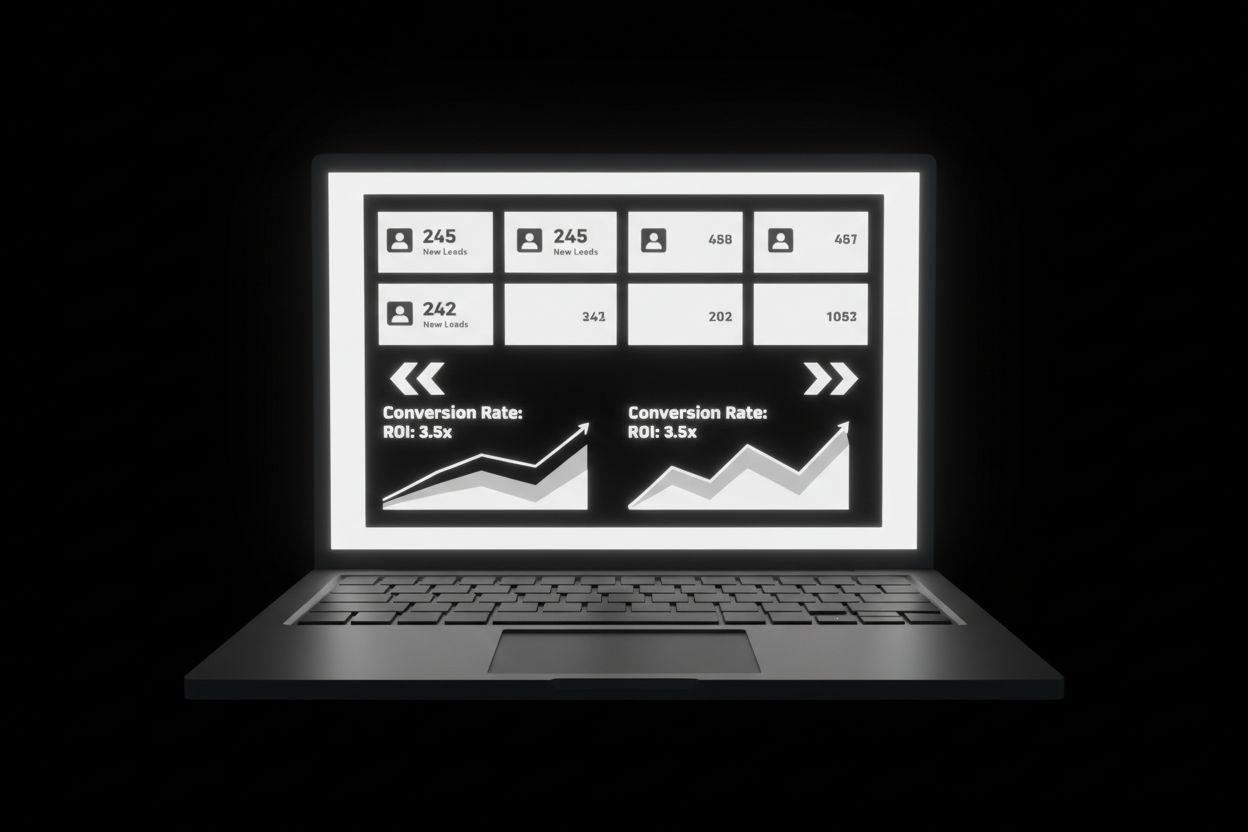
In practical terms, leads generated usually means the count of people who raised their hand and gave you a way to follow up. Salesforce describes lead generation as the process of building interest in a product or service and turning that interest into a sale, and it notes that teams often capture leads through sign-ups, gated content, webinars, virtual events, live chats, whitepapers, ebooks, and social media activity. (salesforce.com)
So when someone asks, “What does leads generated mean?” they usually want the measurement answer, not just the strategy answer. The strategy is how you attract interest. The metric is how many new contacts that strategy produced during a given time window. That distinction matters because two campaigns can generate the same number of leads, but only one may bring in people who are actually likely to buy. (salesforce.com)
Leads generated vs lead generation vs conversions vs customers
These terms get mixed up all the time, but they do not mean the same thing.
Lead generation is the process of creating interest and capturing contact information. (salesforce.com)
Leads generated is the count of those captured contacts in a set period. (support.google.com)
Conversions are valuable actions you define, such as a purchase, newsletter sign-up, phone call, download, or lead form submission. (support.google.com)
Customers are the people who move past lead status and buy. Salesforce frames lead generation as the work that builds interest over time and eventually leads to a sale. (salesforce.com)
If you report on all four correctly, you can see where the funnel is healthy and where it is leaking. For example, a campaign can create lots of leads, but if very few become qualified, the issue is usually not volume. It is targeting, offer fit, or follow-up speed. (salesforce.com)
What counts as a lead in reports?
A lead is not always a sale-ready prospect. In reporting, it is any action you have decided should count as an expression of interest. That can include website forms, call clicks, demo requests, trial sign-ups, downloads, chat conversations, and direct messages. Google defines conversions as actions that are valuable to the business, and it uses conversion tracking to show how ads lead to those actions. (support.google.com)
On social platforms, the definition can be even more specific. Meta lead ads can collect leads through forms, messaging, or calling, while TikTok lead generation can open an instant form, send people to your website, or route them into messaging apps. TikTok also notes that those leads can be synced directly with a CRM through tools like Zapier, LeadsBridge, or custom APIs. (facebook.com)
If you run demand capture across channels, the exact same person might show up in your systems as a form fill, a chat lead, and a sales opportunity later on. That is normal. The real job is to define one clean rule for what counts as a raw lead, what counts as a qualified lead, and what counts as a customer.
How to measure leads generated

The easiest way to measure leads generated is to count every action you have tagged as a lead conversion. In Google Ads, the Conversions column shows how often ads lead to actions you consider valuable, and the platform also breaks performance into interactions, leads, qualified leads, and converted leads through its lead funnel reporting. That makes it easier to see whether a campaign is producing raw inquiries or actual pipeline movement. (support.google.com)
Once you know the count, you can layer in the numbers that matter to the business:
Lead conversion rate = leads generated divided by eligible interactions. Google defines conversion rate this way in its reporting docs. (support.google.com)
Cost per lead (CPL) = total spend divided by leads generated. Salesforce uses this metric as a core way to evaluate lead generation success. (salesforce.com)
Qualified lead rate = qualified leads divided by raw leads. Google’s qualified lead reporting is built around this kind of funnel view. (support.google.com)
Here is a simple example. If a landing page gets 500 visits and 25 form fills, then leads generated equals 25 and the conversion rate is 5 percent. If you spend $2,000 to get those 25 leads, CPL is $80. If 10 of those leads become qualified, your qualified lead rate is 40 percent. The math is simple, but the insight is powerful because it shows whether you need more traffic, better targeting, a stronger offer, or a faster sales response.
A strong CRM setup makes this easier to manage because it gives marketing and sales one place to review source, status, and stage changes. If that is an area you are improving, what is CRM in marketing is worth reviewing alongside your lead reporting.
Where leads come from: SEO, social media, paid ads, and AI

Leads can come from almost any channel, but the best channels usually match intent. Search and content work well when people are already looking for an answer. Social and paid media work well when you need to create attention first and then capture interest. Salesforce says businesses often generate leads through content marketing, social media, SEO, gated content, webinars, and outbound techniques like email outreach. (salesforce.com)
That is why many teams build a mixed system. For discoverability, automated SEO helps bring in organic traffic from people already searching for a solution. For social reach, automated social media keeps your message visible across the channels where demand is created and nurtured.
Paid ads are often the fastest way to scale leads when the offer and landing page are already working. Meta lead ads let you collect leads through forms, messaging, or calling, and TikTok lead generation lets you use instant forms or route people to your website. TikTok also recommends syncing leads into your CRM so follow-up can happen automatically. If you are buying traffic, paid ads management matters because lead volume only makes sense when targeting, creative, and conversion tracking are aligned. (facebook.com)
AI is now part of this mix as well. Salesforce says AI can analyze customer data, automate personalized interactions, and help autonomous agents engage inbound leads in real time through web chat or email, then qualify them and schedule the next step. That is a big deal for speed-to-lead, especially when your sales team cannot reply instantly to every inquiry. If that is the gap you are trying to close, automated AI chat agents can be a practical layer in the funnel. (salesforce.com)
Why lead quality matters more than raw volume
A long list of leads can look impressive, but volume alone does not pay the bills. Salesforce distinguishes between an MQL, which is a lead that has shown interest and meets preset criteria, and an SQL, which is a lead with enough intent to move into the sales process. That handoff matters because the wrong lead at the wrong time slows the pipeline down instead of moving revenue forward. (salesforce.com)
The most useful quality checks are usually these:
Fit: Does the lead match your ideal customer profile? (salesforce.com)
Intent: Has the lead shown signs of active buying interest, such as pricing page visits or demo requests? (salesforce.com)
Source: Did the lead come from a channel that tends to produce buyers, not just clicks? (salesforce.com)
Readiness: Is the lead ready for sales, or do they still need nurturing? (salesforce.com)
Salesforce also highlights lead scoring and B.A.N.T. as useful ways to judge readiness, using signals like budget, authority, needs, and timeline. In other words, a lead is not valuable only because it exists. It is valuable when it is likely to move. (salesforce.com)
That is one reason AI chat agents are so helpful. They can answer questions in real time, collect missing details, and route the best prospects faster, which protects lead quality while improving speed.
Common mistakes when reading lead reports
One of the biggest mistakes is treating every lead as if it has the same value. A webinar sign-up, a pricing-page inquiry, and a phone call from someone ready to buy are all leads in a broad sense, but they are not equal in sales value. Google’s funnel reporting exists for a reason, because raw leads, qualified leads, and converted leads are different stages of the journey. (support.google.com)
Other common mistakes include:
Counting low-intent sign-ups as sales-ready opportunities. (salesforce.com)
Looking only at CPL and ignoring qualified lead rate. (salesforce.com)
Running ads without a clear conversion definition. (support.google.com)
Letting qualified leads sit too long before follow-up. (salesforce.com)
The fix is not complicated. Define what counts as a lead, define what counts as a qualified lead, and review the funnel from click to closed deal. Once the rules are clear, reporting gets much easier and marketing decisions get much sharper.
Real-world examples of leads generated meaning
Here is how the term usually plays out in different businesses:
B2B SaaS: A visitor downloads a comparison guide, joins a product webinar, then requests a demo. The first two actions may create raw leads, while the demo request may be the one sales treats as an SQL.
Local service business: A homeowner clicks a Facebook lead ad, fills out a short form, and requests a call. That form submission is a lead generated event, and the phone conversation determines whether it becomes a job.
Agency or consultant: A founder reads an SEO article, then books a consultation after seeing a case study. The article did not create a sale directly, but it generated the lead that started the conversation.
E-commerce or retail brand: A TikTok instant form collects contact details for a product sample or exclusive offer. TikTok’s lead generation objective is built for exactly this kind of capture and follow-up flow. (ads.tiktok.com)
The pattern is the same in every case. Lead generation creates the hand-raise. The systems around it decide whether that hand-raise becomes revenue.
FAQs about leads generated meaning
What does leads generated mean in marketing?
It means the number of new prospects captured during a specific period. Those prospects may come from forms, calls, chats, social lead ads, or other tracked actions you define as a lead. (support.google.com)
Is a lead the same as a customer?
No. A lead is an early-stage prospect. A customer is someone who has gone through the buying process and completed a sale. Lead generation exists to move people from interest to purchase. (salesforce.com)
How do I calculate leads generated?
Count every action you have configured as a lead conversion. Then you can calculate conversion rate by dividing leads by eligible interactions, and CPL by dividing spend by leads generated. (support.google.com)
What is a good number of leads generated?
There is no universal benchmark. A good number depends on your offer, deal size, channel mix, and how many of those leads become qualified. In practice, quality and sales readiness matter as much as raw volume. (salesforce.com)
What counts as a qualified lead?
Salesforce describes an MQL as a lead that has shown interest and meets preset criteria, while an SQL is a lead with enough intent to enter the sales process. Many teams use that split to separate raw inquiries from real opportunities. (salesforce.com)
What is the fastest way to improve lead quality?
Tighten targeting, simplify the offer, and speed up follow-up. Meta and TikTok both support lead capture formats that can feed directly into your CRM, while AI can help qualify leads in real time before sales steps in. (facebook.com)
The bottom line is that leads generated meaning is not just “people who filled out a form.” It is the measurement of how many new prospects you captured, how good those prospects are, and how well your systems move them toward a sale. If you understand that clearly, your SEO, social media, paid ads, and AI chat flow all become easier to optimize.
