Customer Acquisition Guide: How to Build a Scalable Growth Engine
Learn customer acquisition strategies that turn SEO, paid ads, social media, and AI chat into qualified leads, better conversions, and steady growth.
Customer acquisition is the process of attracting, identifying, and converting interested prospects into paying customers, and it sits at the center of any growth plan. The challenge is not getting attention. The challenge is building a repeatable system that turns traffic, clicks, DMs, and chatbot conversations into revenue without burning cash. (salesforce.com)
If you are still wiring the basics together, Automated Lead Generation - The Social Search can help you capture interest at the point of intent and route it into a real sales process instead of a spreadsheet. Platforms can support that too. TikTok’s lead generation product lets users submit details in a form, supports autofill, and can push leads into a CRM for immediate activation. (newsroom.tiktok.com)
What customer acquisition really means
Customer acquisition is broader than traffic. It includes the channels that bring people in, the offer that makes them care, the landing page or chat experience that reduces friction, and the follow-up system that keeps momentum alive. Salesforce describes it as a refined sales and marketing strategy to grow your customer base repeatedly, which is the right way to think about it if you want predictability instead of one-off wins. (salesforce.com)
A strong acquisition plan usually starts with one clear audience, one clear problem, and one clear next step. If you try to speak to everyone, your messaging gets fuzzy and your conversion rate drops. If you want a helpful search layer on top of that engine, Automated SEO - The Social Search can keep your content and optimization work consistent so your site earns more qualified demand over time.
Why customer acquisition matters

Customer acquisition matters because growth has to come from somewhere. New customers create revenue, expand market share, and give your business room to invest in product, service, and retention. Salesforce also connects acquisition directly to long-term planning by tying customer acquisition to metrics like CAC, CLV, conversion rate, payback period, and channel ROI. (salesforce.com)
It also matters because acquisition and retention are connected. Salesforce’s journey tooling frames the customer lifecycle as moving from acquisition to onboarding, retention, loyalty, and beyond. In other words, the customers you win today should be easier to keep, expand, and refer tomorrow. (salesforce.com)
Build the acquisition funnel that actually converts
The classic customer acquisition funnel still holds up because buyers do not usually move in a straight line. They first notice you, then explore, compare, hesitate, and finally decide. Your job is to make each step feel obvious and low-risk.
Awareness: the prospect sees your brand for the first time
Interest: they want more detail
Consideration: they compare you to alternatives
Intent: they start looking for proof or a next step
Purchase: they convert
Retention: they stay and buy again
The fastest way to improve the funnel is to remove friction where attention is already strong. If someone is interested enough to fill out a form or start a chat, do not make them jump through hoops. Meta’s lead ads are built around forms, calling, and messaging, and its messaging format keeps the follow-up in the same thread so people do not have to switch channels. Meta also says more than 1 billion people message a business each week on its platforms. (facebook.com)
The channels that drive customer acquisition today

There is no single best channel. The right mix depends on your audience, your price point, and how much explanation the buyer needs before they convert.
Google still matters because people search with intent. Google Search Central says it prioritizes helpful, reliable, people-first content, and it also says structured data helps Google understand the page so it can surface richer search features. That means your acquisition content should answer real questions, use clear page structure, and support the reader instead of stuffing keywords. Automated SEO - The Social Search fits well here if you want that process to stay consistent. (developers.google.com)
Paid social is where a lot of modern lead generation starts. Meta says tailored campaigns can use built-in optimal settings and Advantage+ placements to automate audience, placement, budget, and creative decisions, which makes testing easier when you are scaling fast. If you are running acquisition campaigns on Meta or TikTok, Paid Ads Management - The Social Search and Automated Social Media - The Social Search can help you keep the creative, targeting, and follow-up system moving. (facebook.com)
TikTok is especially useful when short-form content can do part of the selling for you. TikTok’s lead generation product is designed to help businesses reach prospects, capture details with in-app forms, and activate leads through CRM integration. That makes it a strong fit for offers that benefit from quick education, visual proof, or a low-friction first step. (newsroom.tiktok.com)
Email and CRM still matter because most buyers need a few touches before they buy. Salesforce notes that a CRM helps you track how people find you and where they are in the buying process, which is why acquisition should never end with the form fill. The follow-up is part of acquisition. (salesforce.com)
Referrals and partnerships can also lower acquisition cost because they borrow trust from someone the buyer already knows. Salesforce specifically recommends referral programs as one way to bring CAC down and make acquisition more efficient. (salesforce.com)
Choose channels by business model
SaaS
SaaS customers usually need more education before they buy, so a mix of search, demo-request ads, retargeting, and chat qualification works well. The goal is to move the visitor from curiosity to a booked conversation without a lot of back and forth.
Ecommerce
Ecommerce acquisition usually rewards fast visual proof, social selling, and a clear offer. Short-form video, creator-style ads, bundles, and cart-friendly landing pages often outperform long explanations because the buyer is already close to purchase.
B2B
B2B acquisition works best when you respect the buying committee. That means targeting the right role, capturing the right qualification data, and making it easy for sales to pick up the conversation with context.
Local services
Local businesses usually win with radius targeting, strong proof, fast response time, and direct messaging. If you run ads for a service business, speed matters almost as much as targeting because many prospects contact the first credible option that replies.
Startups and enterprise
Startups need fast learning loops, so they should test one offer and one channel at a time. Enterprise teams need more patience, stronger proof, and more internal alignment, so they should focus on trust, case studies, and structured follow-up.
The metrics that matter most
If you cannot measure customer acquisition, you cannot improve it. The most useful metrics are the ones that connect spend to revenue.
CAC = total cost of acquiring one new customer, including marketing, sales, tools, and related resources
Conversion rate = conversions ÷ total visitors or leads × 100
CLV = average purchase value × purchase frequency × average customer lifespan
Payback period = CAC ÷ average monthly profit per customer
Lead-to-customer rate = number of customers ÷ number of leads × 100
Channel ROI = (revenue from channel - cost of channel) ÷ cost of channel × 100
Those formulas come straight from Salesforce’s acquisition guidance, and they are useful because they show whether growth is efficient or just busy. If CAC is rising while payback time is stretching out, do not just add more budget. Fix the funnel first. (salesforce.com)
A good dashboard should also show which campaigns produce qualified leads, not just clicks. HubSpot’s AI lead capture guidance is a good reminder that lead scoring should consider fit and engagement signals like job title, company size, website visits, and email interactions, because not every lead deserves the same follow-up. (hubspot.com)
How to build a customer acquisition strategy step by step
Define the ideal customer profile. Salesforce recommends starting with the customer you actually want, not the audience you hope to attract. (salesforce.com)
Pick one primary conversion event. That might be a purchase, booked call, demo request, or lead form.
Match the offer to the channel. TikTok and Meta can work well for discovery and lead capture, while search works better when intent is already high. (newsroom.tiktok.com)
Build the follow-up flow before you launch. If a lead comes in, know who gets it, how fast they respond, and what happens next.
Test one variable at a time. Meta recommends A/B testing lead campaigns with the same audience, budget, and placements to compare what works. (facebook.com)
Review the numbers weekly. Look at CAC, conversion rate, lead quality, and payback period, then adjust the weakest part of the funnel. (salesforce.com)
How AI chat agents improve customer acquisition
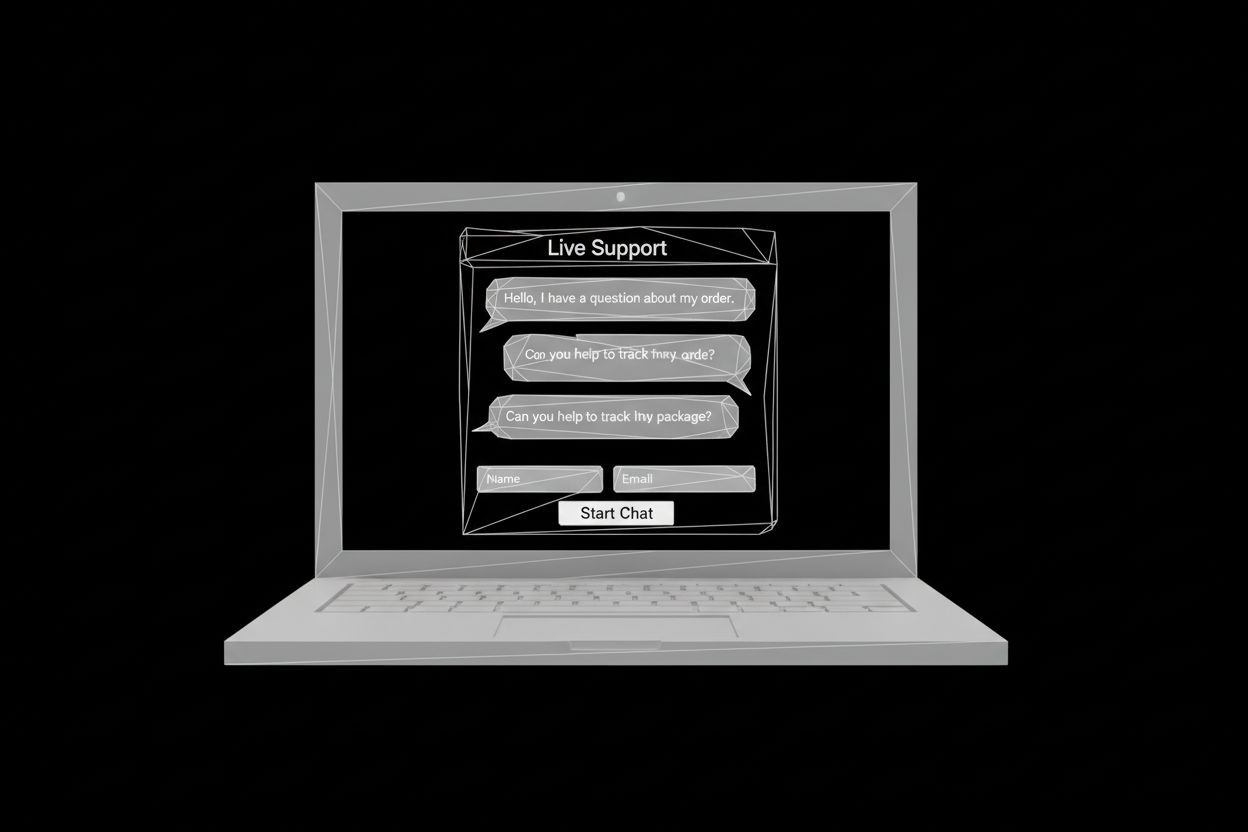
AI chat agents are one of the easiest ways to improve customer acquisition without adding more headcount. HubSpot says AI can engage visitors instantly, answer questions, qualify prospects, capture contact information, and book meetings 24/7. Intercom also emphasizes automatic qualification, routing, tagging, and CRM handoff, which is exactly what a strong acquisition workflow needs. (hubspot.com)
This is where the social and website journey meet. A prospect may discover you on Meta or TikTok, click through to your site, ask a question in chat, and book a call before they ever touch a long form. That is the kind of low-friction path that improves conversion without depending on a huge media budget. If you want to build that layer, Automated AI Chat Agents - The Social Search is the kind of system that keeps the conversation moving after hours.
Meta’s messaging tools support the same idea. Its lead ads that click to message are meant to help businesses develop relationships, filter more leads, and follow up in the same thread. Meta even recommends keeping automated chat to six questions or fewer in many cases, which is a useful reminder that speed and simplicity usually beat overcomplication. (facebook.com)
Customer acquisition vs lead generation, retention, and demand generation
Lead generation is about capturing interest. Customer acquisition is about turning that interest into revenue. Retention is about keeping the customer after the first sale, and demand generation is about creating awareness and preference earlier in the journey. Salesforce’s lifecycle language makes this clear by connecting acquisition with onboarding, retention, loyalty, and beyond. (salesforce.com)
That distinction matters because a lot of teams celebrate leads that never convert. A full funnel view forces you to ask better questions. Did the ad create real demand, or just cheap clicks? Did the landing page match the promise? Did sales follow up fast enough? Did the customer stay long enough to justify the spend?
Common mistakes that waste budget
The biggest acquisition mistake is targeting everyone. Broad reach can be useful, but only if your message is sharp enough to make the right people care.
Other costly mistakes include:
sending paid traffic to a weak landing page
letting leads sit too long before follow-up
measuring vanity metrics instead of revenue metrics
over-relying on one channel
ignoring competitor messaging
failing to test offers and CTAs
Before you launch another campaign, check the Meta Ad Library to see what competitors are actually running across Meta products. It is a simple way to spot recurring offers, formats, and messaging patterns before you spend your own budget. (facebook.com)
A simple customer acquisition checklist
Use this before every campaign:
One audience
One primary problem
One clear offer
One conversion event
One follow-up owner
One KPI dashboard
One weekly testing habit
The fastest way to waste acquisition spend is to send good traffic to a confusing experience.
If you keep the structure simple, customer acquisition becomes easier to scale. If you keep the reporting honest, it becomes easier to defend. And if you keep the follow-up fast, it becomes easier to turn marketing into revenue.
The best programs do not rely on a single channel. They combine search, paid social, AI-assisted chat, and CRM-driven follow-up into one system that keeps learning every week. That is the difference between scattered lead flow and a real growth engine. (salesforce.com)