AI Website Automation Services: Scale Conversions, Cut Costs, and Automate Growth
AI website automation services that streamline lead capture, personalization, chat agents, and ad funnels. Live in weeks, measurable ROI. Book a demo today.
Visitors expect fast, personalized experiences. When your website delivers predictable, timely responses and tailored content, conversion rates rise and costs fall. AI website automation services combine chat agents, dynamic personalization, automated A/B testing, analytics pipelines, and ad funnel orchestration to turn passive traffic into predictable growth.
What is website automation and why it matters
Website automation uses software and AI to run repeatable website tasks without manual intervention. These tasks range from form processing and content updates to intelligent chat conversations and conversion tracking. For marketing and product teams, automation eliminates slow handoffs, reduces human error, and frees budget for strategy rather than execution.
Key outcomes companies see from AI website automation services:
Faster lead response times and higher lead-to-customer conversion
Personalized user experiences that increase average order value
Automated testing and optimization that continuously improves CPA
Scalable workflows for content, offers, and ad funnels
Website automation use cases
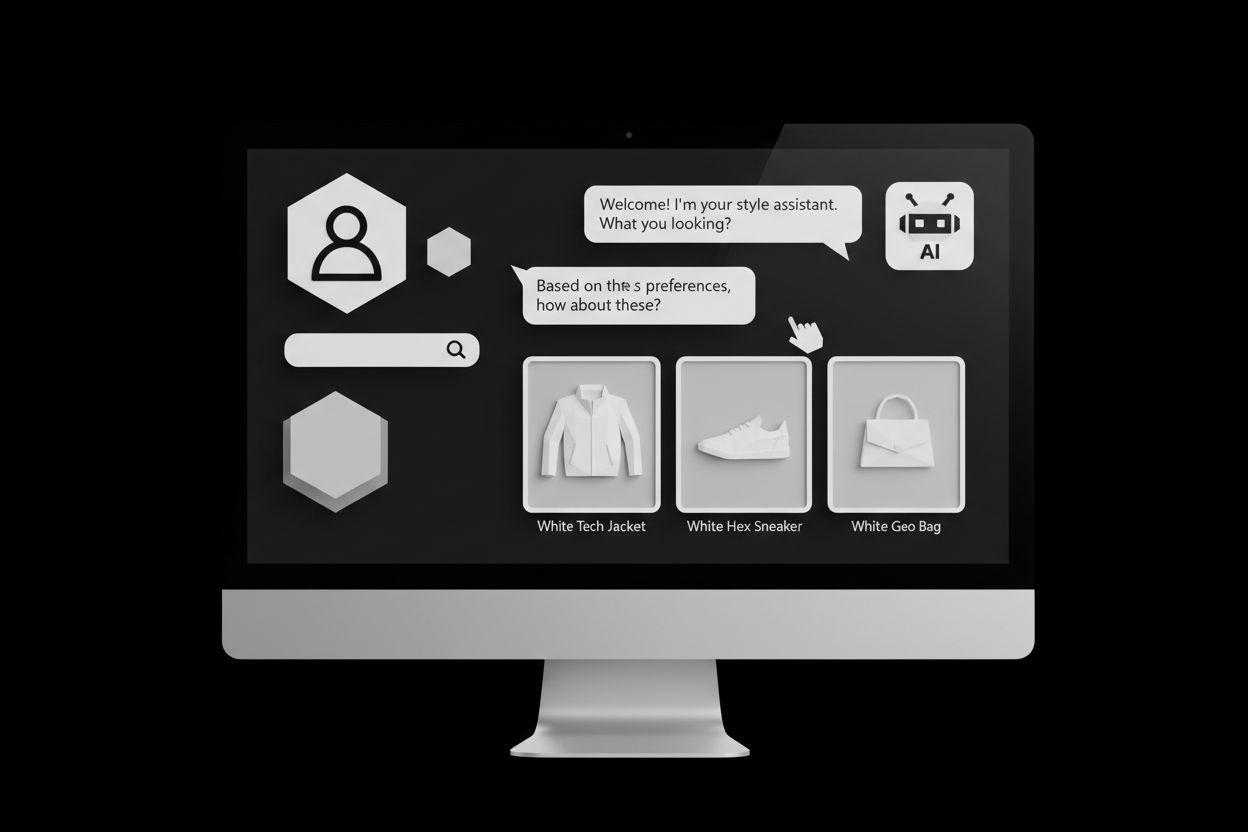
AI website automation services shine when they focus on website-specific problems. Here are concrete use cases you can implement quickly.
E-commerce automation
Dynamic product recommendations based on real-time browsing and purchase history
Cart abandonment recovery via automated email and on-site messages
Price and inventory updates synchronized across product pages and feeds
Impact: higher average order value and fewer lost sales.
Lead capture and nurturing
Smart forms that validate input, enrich leads with third-party data, and route to the right sales queue
Automated lead scoring and follow-up sequences triggered by user behavior
Instant responses through chat agents for high-intent pages
See how automation improves lead velocity in our Automated Lead Generation service: Automated Lead Generation.
Content management and SEO automation
Scheduled content updates, metadata generation, and automated sitemap refreshes
AI-assisted meta titles and descriptions that follow best practices
Automated internal linking suggestions and content gap alerts
User experience personalization
Tailor hero banners, CTAs, and product order based on user segment and intent
Geolocation and device-aware content swaps
Progressive personalization that learns over time from behavior
Chatbots and AI agents
Lead qualification, basic support, and booking handled by AI chat agents
Conversation handoffs to human agents with full context and transcripts
Integrations with CRM and ticketing systems to close the loop
For end-to-end chat agent solutions, check our Automated AI Chat Agents offering: Automated AI Chat Agents.
Analytics and reporting automation
Automated dashboards with weekly KPI spikes and anomaly alerts
Attribution models that update when campaigns or site experiences change
Auto-generated reports for marketing and executive stakeholders
Our website automation solutions
We package AI website automation services into practical modules you can combine. Typical modules include:
Conversational AI: Chatbot flows, lead capture, and 24 7 support handlers
Personalization engine: Rule-based and machine learning driven content swaps
SEO automation: Meta, schema, and crawl management routines
Analytics automation: Data pipelines, event tracking, and alerting
Integration layer: APIs, webhooks, and middleware connectors
Each module includes setup, testing, and a short training session for your team. For sites that need new builds or templates with automation baked in, see our Automated Website Creation service: Automated Website Creation.
Technology stack and integrations
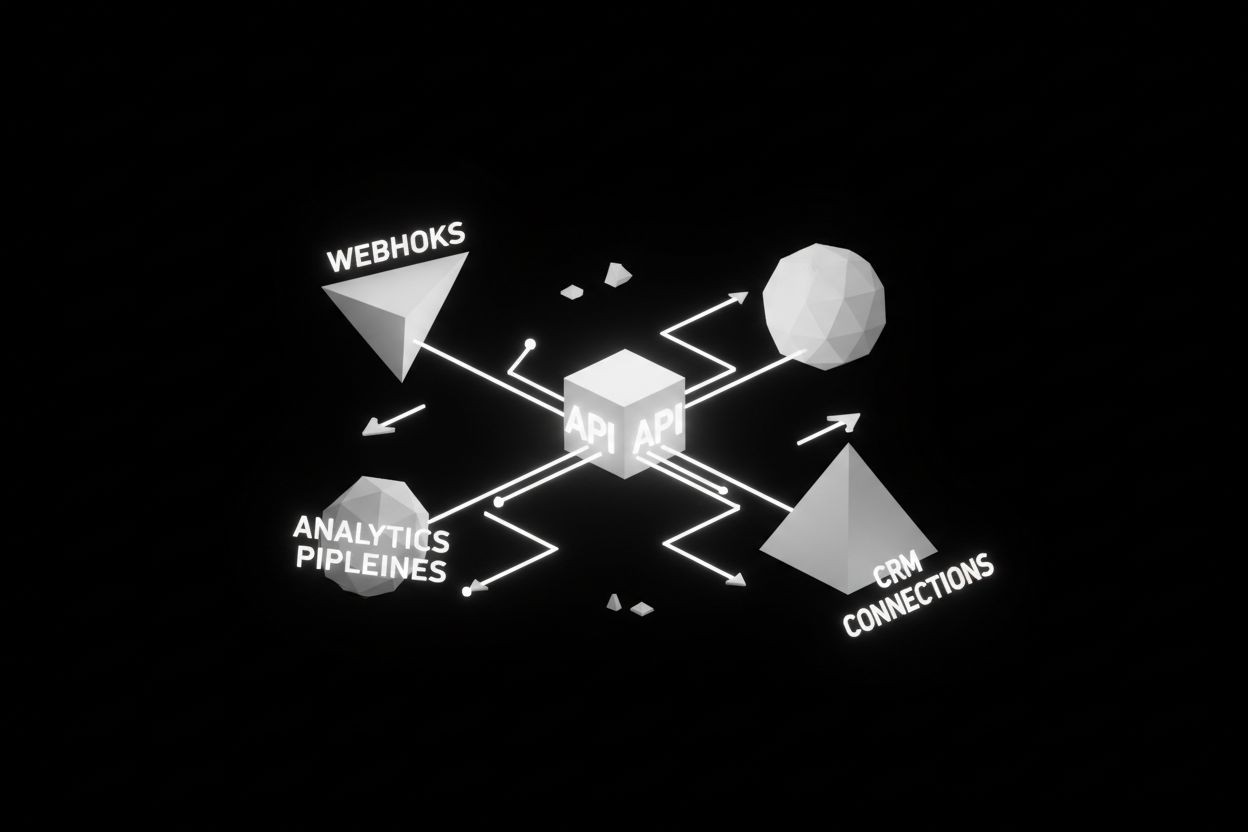
A reliable automation program depends on a clean technology stack and robust integrations. Here is a practical list of components and options.
Core components
Event tracking: client-side events pushed to analytics and event buses
Data layer: normalized user and session data for personalization and reporting
Integration middleware: tools like Zapier, Make, or custom Node services
APIs and webhooks: two-way communications with CRM, ad platforms, and fulfillment systems
Model endpoints: hosted ML models for personalization and scoring
Common third-party integrations
CRM: Salesforce, HubSpot, or Pipedrive for lead routing
Ads: Meta and TikTok for retargeting and creative optimization
Analytics: GA4, BigQuery, or Snowflake for aggregated data
Marketing stack: email ESPs, SMS providers, and push services
Security and compliance
Use OAuth and token-based auth for API connections
Mask and pseudonymize PII when used for model training
Maintain consent records for GDPR and other privacy regulations
Log access and changes for auditing
Technical specs you can expect from a typical setup
Event latency under 250 ms for personalization decisions
Webhook reliability with retry policies and dead-letter queues
JSON REST APIs for CRUD operations and model scoring
Implementation process and timeline

We recommend an iterative approach that delivers tangible value in weeks, not months. Typical timeline for a mid-size site:
Week 0: Discovery and goals
Stakeholder interviews, analytics audit, and conversion funnel mapping
Define KPIs and target pages
Week 1 to 2: Quick wins and technical setup
Implement event tracking and baseline dashboards
Deploy a lead capture chatbot on high intent pages
Week 3 to 4: Personalization and integrations
Launch rule-based personalization on top traffic pages
Wire CRM and ad pixels, set up retargeting segments
Week 5 to 8: Optimize and scale
Introduce machine learning driven recommendations
Run automated A/B testing and iterate on winners
A realistic timeframe to material results is 4 to 8 weeks for initial improvements and 3 months to see stable uplift across KPIs.
Pricing and packages
Transparent pricing helps teams decide quickly. Typical tiered packages look like this.
Starter - $3,500 one-time setup, $500 monthly
Event tracking and baseline dashboards
Lead capture chatbot with basic flows
One personalization rule set
Growth - $9,000 one-time setup, $1,500 monthly
Everything in Starter
ML-driven recommendations on top 5 pages
CRM and ad platform integrations
Bi-weekly optimization sprints
Enterprise - Custom pricing
Advanced personalization at scale
SLA, security review, and dedicated success manager
Full analytics pipeline and model training
These are representative ranges. Exact quotes depend on traffic, integrations, and performance SLAs.
KPIs and measuring ROI
To make automation a board-level conversation, track measurable metrics.
Primary KPIs
Lead response time in minutes
Conversion rate lift on targeted pages
Reduction in manual handling hours
Cost per acquisition change
Average order value and repeat purchase rate
Simple ROI example
If automation reduces lead response time and converts 2 more leads per month worth $2,500 ARR each, annual incremental revenue is $60,000. If the solution costs $18,000 in year one, ROI is significant and payback is under four months.
Case studies and before after
Example 1: SaaS lead flow automation
Problem: Slow lead routing, 48 hour average response
Solution: Chat agent plus lead enrichment and routing
Result: Response time under 10 minutes and 35 percent increase in SQLs
Example 2: Retail site personalization
Problem: High cart abandonment
Solution: Product recommendation engine and targeted onsite messages
Result: 22 percent decrease in abandonment and 14 percent AOV lift
These illustrative case studies show the kind of impact you can expect when AI website automation services are properly scoped and executed.
Comparison: DIY vs professional setup
DIY pros
Lower upfront cost
Full control and internal learning
DIY cons
Hidden time costs for staff
Risk of misconfigured tracking and wasted ad spend
Slower time to measurable results
Professional setup pros
Faster deployment and proven patterns
Access to engineering and data science expertise
Ongoing optimization and SLA support
Professional setup cons
Higher initial investment
For most businesses that need predictable lead flow or are running paid ads on platforms like Meta and TikTok, professional support shortens the path to ROI. If you manage paid campaigns, automation ties directly into performance. Learn how ad funnels benefit from automation in our Paid Ads Management service: Paid Ads Management.
How automation fits with social and ad channels
Automation does not replace paid channels. It improves their efficiency. Examples:
Auto-sync high-intent segments to Meta and TikTok for precise retargeting
Trigger chat sequences for users coming from paid campaigns
Automatically create and test landing page variants tied to ad creative
Combine automated social media scheduling and creative testing with your site automation for a cohesive funnel. For social automation workflows, consult our social automation resources.
Security, privacy, and compliance
Maintain trust by design.
Keep data minimal and relevant for the use case
Implement consent capture and revocation processes
Pseudonymize data used for modeling when possible
Run regular security scans and audits
FAQs
How fast can I see results from AI website automation services?
Expect initial results in 4 to 8 weeks for lead response and personalization improvements. Full maturity and stable ROI typically take 3 months.
Do I need engineers to run these systems?
A small amount of engineering support is helpful for tracking and integrations. We provide managed options for teams without developer resources.
Will automation hurt SEO?
Not if implemented correctly. Ensure server side rendering where needed, keep content accessible to crawlers, and use dynamic rendering best practices for search engines.
What about cost and ROI?
Costs vary by scope. Use conservative estimates for uplift and compare to current conversion metrics to calculate payback. A focused 10 to 20 percent increase in conversions often pays back implementation costs quickly.
Next steps and contact
If you want a short, free assessment of your site and an action plan with estimated timelines and ROI, request a consultation. We can show a prioritized roadmap that includes chat agents, on-site personalization, SEO automation, and ad funnel orchestration. Start here to get your automation plan: Contact our team.
If you want to explore modules and integrations that match your goals, we can map the right combination and provide a clear implementation path.
Ready to transform your website into a conversion engine with AI website automation services? Book a demo and get a tailored action plan that shows expected gains in weeks, not months.