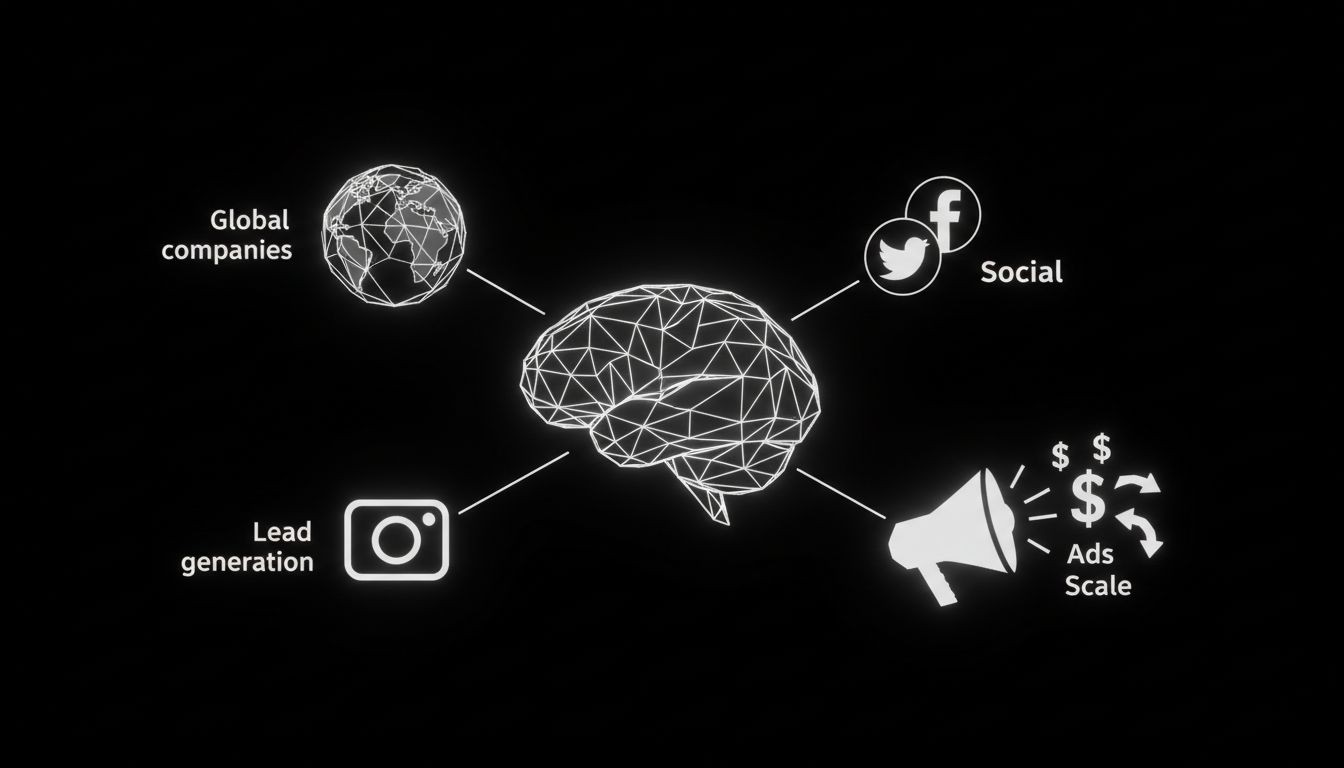
AI marketing for global companies: A practical guide to scale lead generation, social, and ads
Practical guide to AI marketing for global companies. Learn how to scale lead generation, AI chat agents, social media, and Meta and TikTok ads across markets.
Global companies face unique marketing challenges: multiple languages, diverse customer expectations, regional regulations, and the pressure to show ROI fast. AI marketing for global companies is not a single tool. It is a coordinated stack of data, automation, creative workflows, and governance that lets teams scale personalized campaigns, automate lead capture, and optimize paid spend across markets.
In this guide you will find a practical roadmap to build and scale AI-driven marketing across regions. It covers core capabilities, concrete tactics for social media and paid channels, integration with AI chat agents, localization and compliance steps, measurement, and a simple pilot-to-scale plan you can adapt to your organization.
Why AI marketing matters for global companies

AI marketing for global companies delivers three practical benefits: speed, scale, and precision. Speed comes from automating repetitive tasks like audience discovery and creative variants. Scale comes from using models and templates so teams can deploy regionally tailored campaigns without reinventing the wheel. Precision comes from using predictive analytics to place the right message in front of the right audience at the right time.
Concrete examples of value:
Faster lead qualification with AI chat agents that work 24-7 in local languages.
Lower cost per acquisition by automating A/B tests and reallocating ad spend to top performers.
Higher engagement by serving localized creative and messaging based on local cultural signals.
These wins matter for global companies because incremental improvements in conversion rates and cost efficiency multiply across markets and product lines.
Core components of an AI marketing stack for global teams
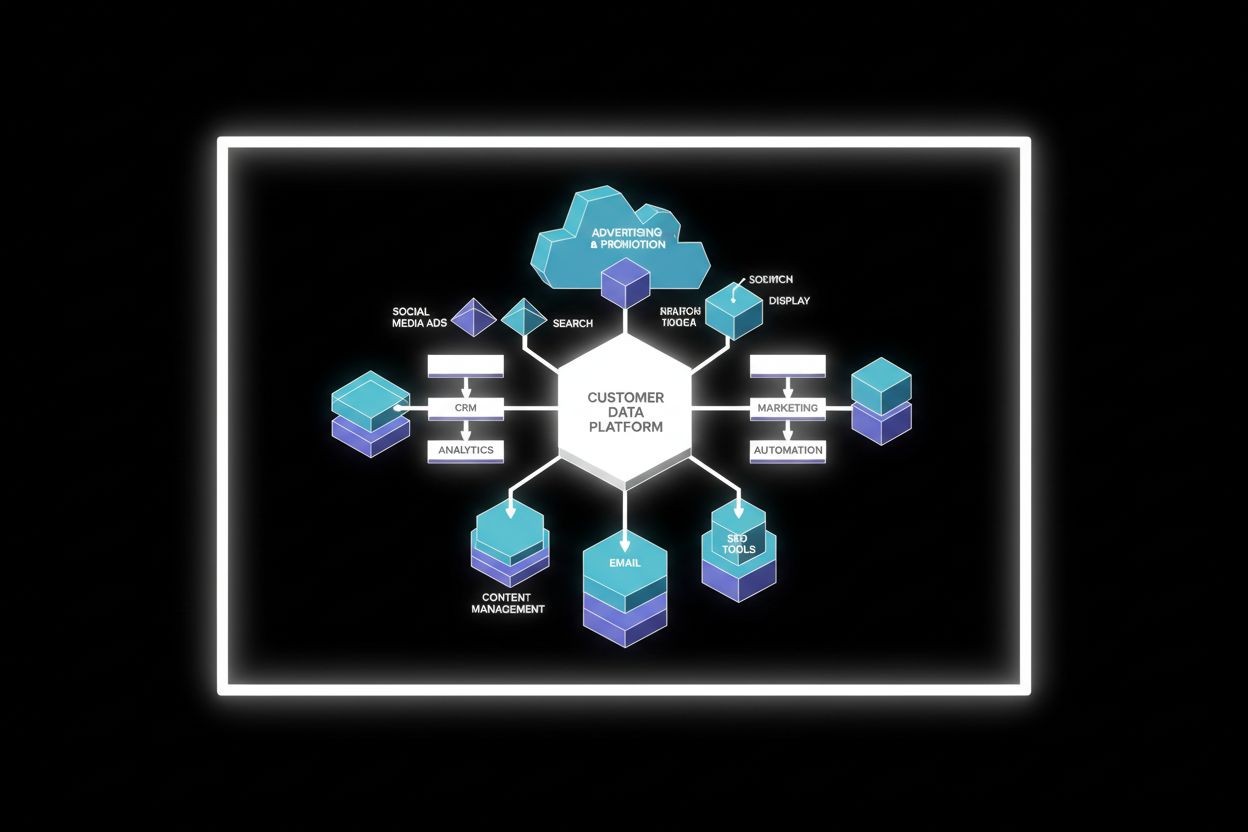
To operationalize AI marketing for global companies, build around five core components:
Data foundation
AI-enabled customer interactions
Scalable creative and social workflows
Paid media automation for platforms like Meta and TikTok
Measurement and governance
1. Data foundation
A reliable, privacy-first data layer is essential. Collect first-party signals from websites, apps, CRM, and AI chat agents. Standardize event names and user identifiers across markets. Use regional data storage where required for compliance and set up consent management that ties directly into activation systems.
Why this matters: models and ad platforms need consistent, high-quality data to target and measure effectively.
2. AI-enabled customer interactions
AI chat agents handle lead capture, qualification, and routing. They serve as the front line for 24-7 engagement and feed high-value signals back into CRM. To be effective globally, these agents must support local languages, idioms, and regulatory disclosures.
A few best practices:
Integrate chat agents with CRM so lead scores and conversation transcripts are preserved.
Use templates for common flows such as demo booking, pricing qualification, and support triage.
Monitor handoff metrics where the agent escalates to a human.
Explore an implementation approach with an automated AI chat agent solution when you are ready to scale.
3. Scalable creative and social workflows
AI can accelerate copy and asset production, but you must combine automation with human review for cultural fit. Create a library of creative templates and brand-safe prompts to generate social variants at scale. Use AI to produce short-form video scripts, image captions, and localized headlines, then have regional teams validate.
For continuous social publishing, connect AI-driven content pipelines to scheduling and analytics systems. This reduces time to market for trending moments and improves local relevance.
If you are refining social automation, see our service on Automated Social Media for approaches that balance automation and human oversight.
4. Paid media automation for Meta and TikTok
Platform-specific automation helps you manage budgets, creative testing, and audience segmentation across markets. Use AI to generate creative variants, then let automated bidding and budget allocation find the most efficient markets.
Tactics that work:
Run creative split tests using many small variants and let the platform optimize winners.
Use lookalike audiences seeded with high-quality leads from your CRM and AI chat agents.
Automate budget reallocation across regions based on real-time performance rules.
If you need vendor support for media buying at scale, consider a managed Paid Ads Management partner to handle platform nuances and optimization.
5. Measurement and governance
Define a consistent measurement framework. Use a unified naming convention for campaigns and events so you can compare performance across markets. Set guardrails for privacy, data retention, and opt-out choices. Audit models periodically for bias and performance drift.
Relevant KPIs to track:
Cost per qualified lead by region
Time to lead response
Conversion rate from chat conversation to demo or purchase
ROAS and incrementality tests on paid channels
For SEO-driven growth that complements paid and social efforts, link your work to automated SEO systems and insights in Automated SEO.
A practical implementation roadmap
Start small and expand in phases. Below is a three-phase approach you can adapt for a global rollout.
Phase 1: Strategy and pilot (6 to 12 weeks)
Define target markets and priority verticals based on revenue potential and readiness.
Audit data sources, consent flows, and regional constraints.
Build one pilot: a single country or language for a specific product line.
Deploy an AI chat agent for lead capture and run a simple paid test on Meta or TikTok with localized creative.
Measure conversion funnel from click to qualified lead.
Success criteria for pilot:
Lower cost per qualified lead than the historical average in the test market
Demonstration that chat agents capture and pass leads reliably to CRM
Local team signs off on creative and messaging
Phase 2: Expand and standardize (3 to 6 months)
Create reusable templates for creative, consent texts, and chat flows.
Standardize event tracking and campaign naming conventions.
Configure cross-market dashboards and automated reporting.
Run multi-market campaigns with automated budget orchestration.
At this stage, integrate with services that can automate lead flow and scaling such as Automated Lead Generation - The Social Search.
Phase 3: Scale and optimize (6 to 18 months)
Deploy to additional regions using the standardized playbook.
Invest in model fine tuning for high-value markets.
Implement advanced audience strategies, like propensity models and churn prediction.
Establish a center of excellence for governance and model monitoring.
By the end of scaling, your teams should be operating with clear SLAs for model retraining, localization updates, and campaign rollouts.
Localization, compliance, and cultural sensitivity
Localization is more than translation. For AI marketing for global companies you need localized strategy, creative, and experience design.
Checklist for localization:
Local copy review by native speakers
Image and music choices that reflect local culture
Localized privacy notices and consent language
Payment and demo booking flows adapted to regional preferences
Accessibility and mobile-first design optimization
Compliance notes:
Store data regionally where laws require it
Map consent flows to each jurisdiction
Keep records of model training data sources and redaction procedures
For legal and policy questions use in-house counsel and set up a cross-functional review before expanding into new regions.
Social media with AI: practical tactics
AI can speed content ideation and production. Use these tactics to get results on social channels:
Trend mining: use natural language tools to surface trending topics and create a few quick assets to test engagement.
Video templates: produce short-form videos with localized captions and A/B test thumbnails and hooks.
Community automation: automate routine replies and routing with escalation to human community managers when tone or complexity requires it.
Combine AI-driven content with a human review layer to avoid tone mismatches and brand risk. If you lack internal bandwidth, our Automated Social Media approach balances speed with oversight.
Running Meta and TikTok ads at scale
Both Meta and TikTok reward creative relevance and engagement. Apply these operational rules:
Create many creative variants and let the platform optimize winners.
Use short attention-grabbing openings for video assets and localize text overlays.
Feed high-intent signals from AI chat agents and CRM back into ad platforms to improve targeting.
Run incrementality tests to measure real lift from ads versus other channels.
Budget orchestration tip: automate rules that shift spend to markets and creatives that show positive unit economics. This reduces manual switching and speeds up learning.
Measurement framework and KPIs
A simple, effective measurement framework tracks both activity and outcomes. Examples of metrics to monitor weekly or daily:
Impressions and engagement rate by creative and market
Click-through rate and cost per click
Cost per qualified lead and conversion rate to trial or purchase
Chat agent response time and lead handoff rate
ROAS and customer lifetime value changes
Use cohort analysis to compare performance across markets and hold out test markets to measure incrementality.
Common pitfalls and how to avoid them
Relying on one model or vendor for everything. Use a best-of-breed approach where appropriate and keep data portable.
Skipping human review for localized content. Always validate creative with native speakers.
Neglecting governance and auditing. Put retraining and bias checks on the calendar.
Treating chat agents as a replacement for sales. Use them to qualify and route leads, not to replace complex negotiations.
Example playbook: 90-day pilot for a new market
Week 1 to 2: Market selection, compliance review, and KPI setting.
Week 3 to 4: Implement tracking, consent flows, and connect CRM.
Week 5 to 8: Launch chat agent for lead capture and run localized Meta and TikTok ads with 12 creative variants.
Week 9 to 12: Analyze results, optimize creative and bidding, and prepare scale recommendations.
Outcome: clear decision on whether to scale, what investments are needed, and estimated ROI per market.
Next steps and resources
If you want to move from strategy to execution, start with a focused pilot in one high-potential market and centralize the data model. Build reusable templates for creative and chat flows so regional teams can adapt them quickly. Consider partnering with specialists for media buying and lead automation while you build internal capabilities.
Relevant resources you can review:
For automated lead flow and nurturing, see Automated Lead Generation - The Social Search.
To scale chat agents effectively, check Automated AI Chat Agents - The Social Search.
If you want a managed approach to paid media, review Paid Ads Management - The Social Search.
For ongoing content and SEO alignment, consider Automated SEO - The Social Search.
When you are ready to discuss a pilot, reach out through our contact page and outline your priority markets and KPIs.
AI marketing for global companies is a process, not a product. With the right data foundation, localized workflows, and disciplined measurement, you can reduce cost, increase speed, and scale personalized experiences across regions. Start small, measure fast, and iterate with a governance-first mindset.