Off-Page SEO Guide: How to Build Authority, Earn Links, and Drive Leads
Learn off-page SEO strategies that build authority, earn quality links, grow brand mentions, and turn visibility into leads.
Off-page SEO is everything you do outside your website to earn authority, trust, and discovery. Google says links are a signal for relevancy and crawling, and its SEO guidance also recommends promoting new content through social media, community engagement, advertisements, and word of mouth. That matters for lead generation because the strongest off-page SEO builds the kind of visibility that compounds, including branded searches, referrals, mentions, and links that keep working after the first campaign is over. (developers.google.com)
If you want the on-site foundation to stay clean while you build authority off-site, Automated SEO is a useful place to keep the core work organized.
In this guide, you’ll learn what off-page SEO really includes, which tactics deserve your time first, how to measure progress, and how to turn authority into actual pipeline instead of just traffic.
What Off-Page SEO Really Is and Why It Matters

Off-page SEO is usually the work that happens beyond your own pages, including backlinks, brand mentions, digital PR, social sharing, reviews, and local citations. Semrush describes it as actions outside your website that build authority and trustworthiness, while Google’s documentation stresses that links help search engines understand relevance and discover new pages. In plain English, off-page SEO is other people, platforms, and publications validating that your business is real and worth paying attention to. (semrush.com)
On-page SEO gives search engines the content, structure, and internal links they need to understand your site. Off-page SEO gives them third-party proof. Both matter, but off-page is often the difference between a site that publishes content and a brand that actually gets talked about.
A practical way to prioritize off-page SEO
If you are starting from scratch, do not try to do everything at once. Focus on the leverage points first:
Fast wins: reclaim unlinked mentions, optimize your Google Business Profile, ask for real reviews, and share one strong piece of content across your channels.
Mid-term plays: guest posts, podcast appearances, expert quotes, broken link building, and community engagement.
Advanced plays: digital PR, original research, linkable tools, comparison pages, and competitor backlink gap analysis.
Best for local businesses: citations, review management, local partnerships, and consistent directory listings.
Best for content-led brands: data studies, templates, calculators, and assets people naturally want to reference.
That framework is useful because it matches the themes Google and Semrush keep returning to: promotion, links, mentions, reviews, and competitor analysis. (developers.google.com)
Backlinks, Brand Mentions, and Social Reach
Backlinks are still the backbone, but quality wins
Google says links help determine relevancy and help it find pages to crawl, and it also recommends clarifying the nature of certain links with rel="sponsored", rel="ugc", or rel="nofollow" when appropriate. Semrush adds that a strong referring domain profile is about relevance and reputation, not just raw volume. The best backlinks feel natural to users first, then useful to search engines second. (developers.google.com)
A good backlink usually checks most of these boxes:
Topically relevant to your industry
Placed in editorial content, not a footer farm
Surrounded by useful context
Sent with natural anchor text
On a page that actually gets crawled and visited
From a site that has real reputation and real traffic
If you want a quick quality test, ask one question: would this link still make sense if search engines did not exist?
Competitor backlink gap analysis is one of the fastest shortcuts
Instead of guessing who might link to you, compare your backlink profile with competitors and look for the domains that already link to them but not to you. Semrush’s Compare Domains and Backlinks tools are built for that kind of benchmarking, and the Backlinks overview highlights referring domains, anchors, and traffic trends you can use to prioritize outreach. (semrush.com)
That matters because you are not just looking for more links. You are looking for patterns, such as which content types attract links, which publications repeatedly cover your niche, and which partners are already comfortable citing brands like yours.
Brand mentions matter more than people used to think
Unlinked mentions are especially valuable because they often turn into links with a simple, polite outreach email. Ahrefs’ guidance on unlinked mentions shows how brands can identify pages that mention them and then check whether those mentions already link back. Ahrefs also notes that brand monitoring should cover websites, social media, and LLMs, not just classic search results. (ahrefs.com)
That is a big deal for modern SEO because brand mentions now help beyond classic ranking. Ahrefs and Semrush both point to brand visibility across the web as an ingredient in AI search visibility, and Ahrefs’ AI Overview research found strong correlations between brand web mentions and AI Overview visibility. (ahrefs.com)
Social media is an amplifier, not a magic ranking lever
Google explicitly lists social media promotion, community engagement, advertisement, and word of mouth as ways to promote a site and help both people and search engines discover new content faster. Ahrefs adds an important nuance, social signals are not a direct ranking factor, but social distribution can help content reach the right people, earn links, and build authority over time. (developers.google.com)
That is why off-page SEO and social strategy should work together. If your content never gets seen, it cannot get linked, mentioned, or cited. If you want to keep that process moving without living in spreadsheets, Automated Social Media can help you stay consistent.
For brands running paid distribution on Meta or TikTok, the goal is not vanity reach. It is to get your best pages, studies, and offers in front of the audiences most likely to share, cite, or bookmark them. If a piece is linkable, paid promotion can be the first spark that makes it travel.
Local SEO Is Off-Page SEO With a Storefront
If you serve a local market, off-page SEO gets even more concrete. Semrush says local citations and reviews can improve visibility in Maps and local search, and Google’s LocalBusiness documentation makes it clear that search results can show business details and review-related information. In local SEO, consistency is the whole game, because customers and search engines both rely on the same public footprints. (semrush.com)
The most useful local off-page moves are:
Creating and optimizing your Google Business Profile
Keeping your name, address, and phone number consistent across directories
Earning real reviews from real customers
Responding to reviews quickly and professionally
Building local partnerships that generate mentions and citations
Google also notes that reviews are checked for policy compliance, and some reviews may be delayed or removed if they violate policy. That is why review requests should be authentic, not gamed. Consistent, honest feedback builds trust over time, and that trust supports both rankings and conversions. (semrush.com)
How to Measure Off-Page SEO Without Guessing
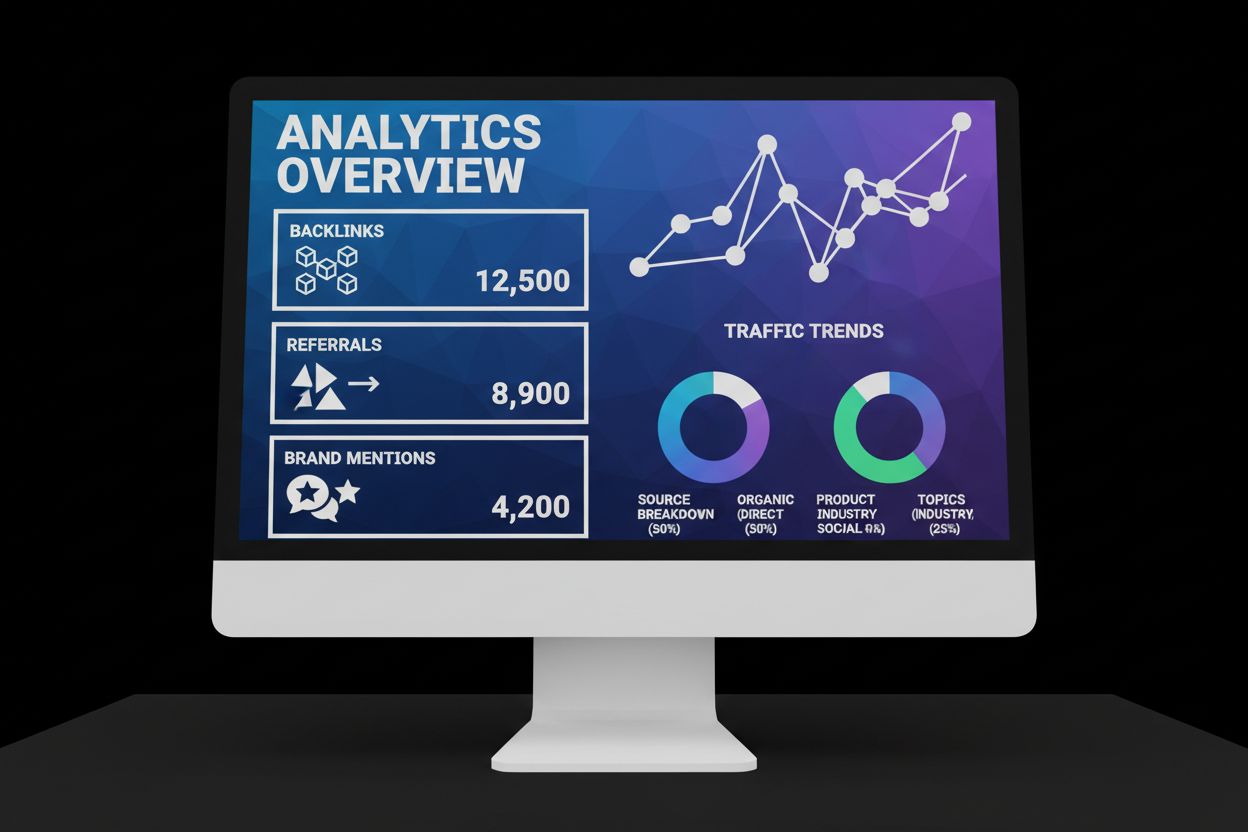
The best off-page SEO programs are measured, not guessed. Semrush recommends tracking referring domains, backlinks, anchor text, link health, and lost links, while Google Search Console’s top linking sites report helps you see which external domains point to your site. Ahrefs’ brand-monitoring approach also shows why you should watch websites, social media, and LLMs together instead of treating them like separate worlds. (semrush.com)
Here are the KPIs that matter most:
Referring domains
Backlink quality and topical relevance
Lost links and reclaimed links
Brand mention volume
Branded search growth
Referral traffic
Review count and average rating
Share of voice in AI tools
Competitor backlink overlap
If you are working on AI visibility, do not stop at rank tracking. Ahrefs says AI visibility depends on how often and how prominently AI platforms mention your brand, and Semrush says brand mentions can improve both SEO and AI visibility. That means your reporting needs to include mentions and citations, not just positions. (ahrefs.com)
A simple competitor check you can run monthly
Use a compare-domains view to see where your backlink trend, branded traffic mix, and paid versus organic footprint differ from your closest competitors. Then ask three questions:
Which sites link to them but not to us?
Which content types do they publish that we do not?
Which mentions or reviews keep showing up around their brand?
That kind of review turns off-page SEO from a vague idea into a repeatable growth system. It also shows you exactly where to spend your next outreach hour.
A Simple Outreach Workflow That Scales
Semrush’s link-building guidance points to a practical workflow: research competitors, prospect relevant sites, send personalized outreach, and monitor results. It also highlights broken link building, unlinked mentions, becoming a source, and creating linkable assets as repeatable tactics. That is the part most teams miss. They think link building is an event. In reality, it is an operating system. (semrush.com)
A clean outreach workflow usually looks like this:
Build a prospect list from competitor gaps and topical relevance.
Find a real reason to contact each site or creator.
Offer one useful asset, not a generic request.
Personalize the email with a specific page, insight, or improvement.
Follow up once or twice, then move on.
Track replies, live links, and lost links in a sheet or CRM.
If you want the follow-up side to move more smoothly, Automated Lead Generation can help keep the handoff from interest to pipeline organized. And once those visitors arrive, Automated AI Chat Agents can qualify them fast, answer questions, and route the best conversations to your team.
A few outreach ideas that still work well:
Guest posts that genuinely educate the host site’s audience
Expert commentary for journalists and niche publications
Podcast guest spots and webinar appearances
Broken link replacement on relevant resource pages
Data-led content that other writers actually want to reference
Mistakes That Can Hurt Off-Page SEO
Google is very clear that link spam is about creating links to or from a site mainly to manipulate rankings. It also warns against selling links that pass PageRank and against large-scale article campaigns where the main goal is link building rather than useful content. Site reputation abuse is another risk area, especially when third-party content is published mainly to take advantage of another site’s ranking signals. (developers.google.com)
Avoid these common mistakes:
Buying links or advertorials that pass PageRank
Using the same exact anchor text over and over
Publishing thin guest posts across lots of sites
Ignoring
rel="sponsored",rel="ugc", andrel="nofollow"where appropriateChasing low-quality directories that nobody uses
Letting spammy or unnatural links pile up without review
If you inherit a messy backlink profile, Google says the disavow tool is for advanced cases and most sites do not need it. The better first step is to remove what you can, then use disavow only if there is still a real unnatural-links problem. (developers.google.com)
How Off-Page SEO Turns Visibility Into Revenue
Off-page SEO should not stop at rankings. Google says promotion through social media, community engagement, advertisements, and word of mouth helps content get discovered faster, and AI visibility research suggests that broader brand presence across the web can influence whether AI systems surface your brand in answers. That means every good backlink, mention, review, and share can be part of a larger lead-gen engine. (developers.google.com)
If you want that engine to actually produce pipeline, think about the full journey:
Attract attention: publish a linkable asset, then promote it.
Capture interest: use Paid Ads Management to amplify the best content to the right audience.
Start the conversation: use AI chat agents to handle first contact and qualification.
Move leads forward: connect the demand to your CRM and follow-up process.
That is where off-page SEO becomes more than a ranking tactic. It becomes a demand-generation system.
FAQ
Is off-page SEO still important in 2026?
Yes. Search engines still use links as a signal, and modern off-page SEO also supports brand mentions, reviews, social discovery, and AI visibility. The specific tactics change over time, but the need for outside validation does not. (developers.google.com)
How many backlinks do I need?
There is no universal number, because competition matters. Semrush reports that pages ranking #1 in Google have over 200 referring domains on average, while pages ranking #10 have fewer than 80. Use that as a directional benchmark, not a goal to chase blindly. (semrush.com)
Should I disavow bad links?
Only if you have a real issue and you have already removed what you can. Google says the disavow tool is for advanced webmasters and most sites do not need it. In most cases, cleanup and prevention matter more than panic. (developers.google.com)
What is the safest place to start?
Start with the highest-leverage basics: reclaim unlinked mentions, audit your backlink profile, optimize your Google Business Profile if you are local, and publish one genuinely useful asset worth sharing. That gives you momentum without drifting into spammy tactics. (ahrefs.com)
Off-page SEO works best when it feels like reputation building, not a shortcut hunt. Focus on useful content, real relationships, consistent promotion, and clean measurement. Do that well and the links, mentions, searches, and leads tend to follow.