Lead Gen Definition: What It Means, How It Works, and Why It Matters
Understand the lead gen definition, how it works, and which channels turn interest into pipeline with SEO, social ads, and AI chat agents for faster growth.
The simplest lead gen definition is this: it is the process of attracting people who are likely to buy, capturing enough information to start a real conversation, and nurturing that interest until sales can follow up. Salesforce describes lead generation as reaching prospects early in the journey so you can build trust, while TikTok defines it as identifying and cultivating potential customers. (trailhead.salesforce.com)
If you are building this system today, it usually lives across search, social, ads, landing pages, forms, chat, and CRM handoffs. That is why a practical lead gen strategy is not just about traffic, it is about how quickly you can turn attention into a contact record and a sales-ready next step. If you want the operational version of that idea, our automated lead generation service page shows how the pieces fit together. (trailhead.salesforce.com)
What the lead gen definition actually means
A lead is not the same thing as a visitor. It is a person or company that has raised a hand in some way, often by filling out a form, clicking a message ad, sharing a phone number, or requesting a callback. Salesforce and TikTok both frame lead generation as a way to identify interest early and keep the conversation going until the buyer is ready. (trailhead.salesforce.com)
That bridge matters because demand generation creates awareness, while lead generation captures qualified contacts for follow-up. In other words, demand gen gets people interested, lead gen gets them into your system. (salesforce.com)
How lead generation works in practice

A clean lead generation flow usually moves through six steps: attract, capture, qualify, nurture, hand off, and convert. Salesforce Trailhead ties the process to content, website forms, SEO, social, email, and continued follow-up, while Meta and TikTok both offer capture tools such as instant forms, messaging, calling, and CRM syncing. (trailhead.salesforce.com)
Attract with search, content, ads, and social so the right people notice you. (salesforce.com)
Capture with a form, lead ad, chat flow, or callback request so interest becomes a contact record. (facebook.com)
Qualify by checking fit and intent, then separating casual interest from real buying signals. (salesforce.com)
Nurture with useful follow-up such as email, content, product education, or retargeting. (trailhead.salesforce.com)
Hand off sales-ready leads when the timing and intent are strong enough for a direct conversation. (salesforce.com)
Convert and measure whether those leads become customers, not just form fills. (salesforce.com)
That sequence is what makes lead generation useful. Without it, you may still get clicks and comments, but you will not have a repeatable way to turn attention into pipeline.
Lead generation channels that matter today
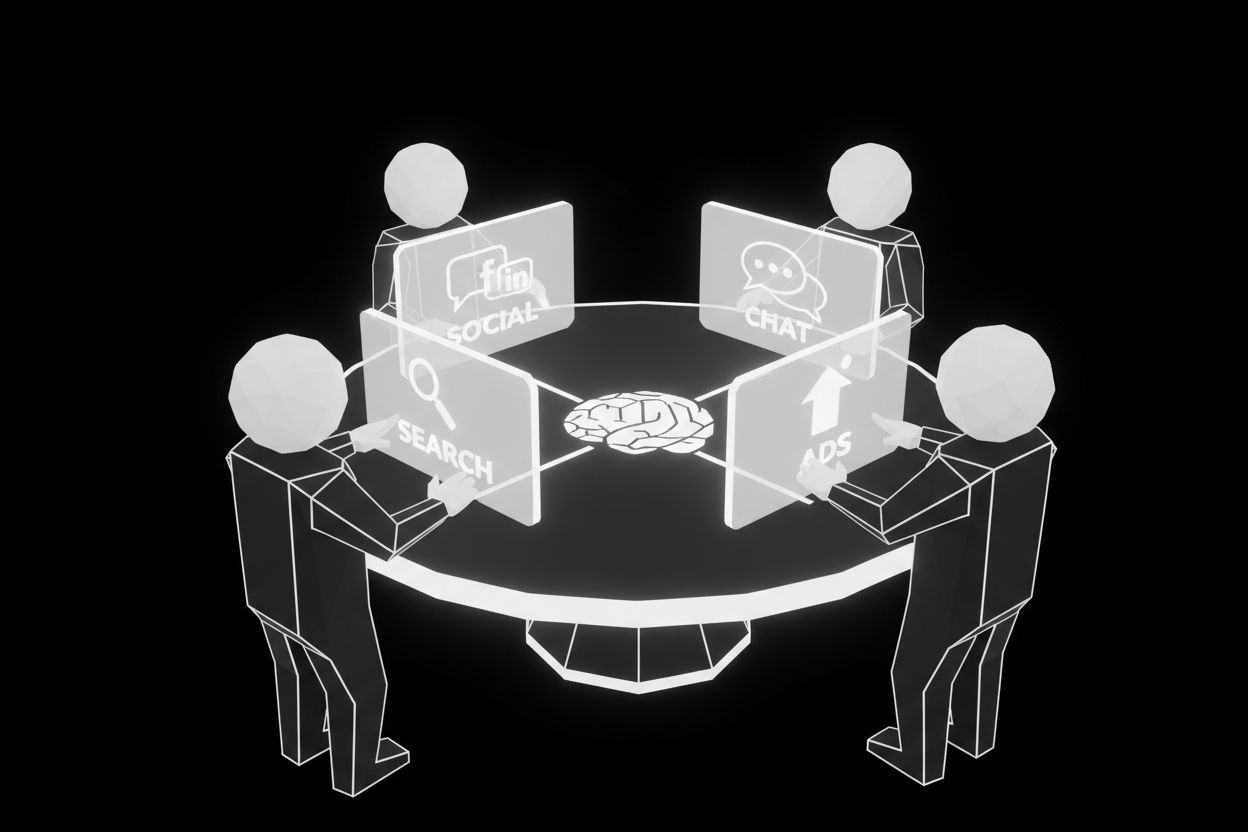
SEO and content
SEO is still a core lead gen channel because it puts your content in front of people already looking for an answer. Salesforce Trailhead calls out SEO, content marketing, and website forms as part of inbound lead generation, and Salesforce’s marketing channel overview notes that social media and SEO can work together to boost awareness while paid advertising adds faster visibility. (trailhead.salesforce.com)
That is why the phrase lead gen definition itself matters for search. People who search that term are usually trying to understand the concept before they commit to a channel, a tool, or a campaign. If you want that built as a system, our automated SEO service focuses on creating pages that attract qualified traffic and convert it into leads.
SEO works best when the page answers a real buying question, not when it only tries to rank. A useful lead magnet, a strong landing page, and a simple form can turn organic attention into measurable contact growth. (salesforce.com)
Social media and paid ads
Social media is often where lead gen gets scaled. HubSpot notes that social media can attract website visitors and leads, and Salesforce says strong lead generation ROI often comes from social media, customer communities, and paid search engine marketing. On Meta, lead ads can use forms, messaging, or calling, and the platform’s Advantage+ leads campaigns use AI optimizations for audience, placement, and budget. TikTok also offers lead generation through in-app forms or your own website form, plus CRM integrations and lead management in Leads Center. (hubspot.com)
If you run short-form creative, the connection between organic and paid matters even more. Our automated social media page and paid ads management page are useful references for building that mix without making the process messy.
Meta’s AI tooling is especially useful when you want scale without losing too much control. Advantage+ can automate parts of the campaign setup, and Meta’s creative tools can optimize images, video, and audio. That makes it easier to test more lead angles without rebuilding everything by hand. (facebook.com)
AI chat agents and conversational lead capture
Chat-based lead gen works because many people are willing to ask a question before they are ready to fill out a form. Meta’s click-to-message lead ads let you follow up in the same chat thread, and its guidance suggests keeping automated chat short and purposeful. Salesforce also says AI-powered lead generation can improve qualification, scoring, segmentation, and personalized outreach at scale. If you are building that front end, our automated AI chat agents page is a helpful place to start. (facebook.com)
For service businesses, agencies, and any offer that needs explanation, chat can lower friction before the lead ever reaches a form. It is often the fastest way to turn an anonymous visitor into someone you can qualify.
Lead generation vs demand generation
These terms are related, but they are not interchangeable. Demand generation is the broader effort to create awareness and interest, while lead generation is the step where that attention turns into a contact you can nurture and qualify. In practice, demand gen fills the top of the funnel, and lead gen captures the hand raises that are worth following up on. (salesforce.com)
A strong funnel uses both. A social campaign can create curiosity, a search page can answer intent, and a message flow or form can turn that interest into an owned lead. That is the difference between attention and pipeline.
B2B vs B2C lead generation
B2B lead generation usually needs more education, more touchpoints, and tighter qualification because the purchase is often more complex. Meta specifically calls out services and other complex consideration cycles as a strong fit for lead ads, while Salesforce emphasizes using content and follow-up to build trust before sales outreach. B2C, on the other hand, often wins with shorter forms, faster response times, and lower-friction capture such as message ads or instant forms. (facebook.com)
A software company might use SEO, webinars, and demo requests. A local service business might use click-to-message ads, call buttons, and quote forms. The lead gen definition stays the same, but the path changes with the buying cycle.
How lead scoring turns raw leads into pipeline
Once leads are captured, scoring helps decide who gets attention first. Salesforce defines lead scoring as ranking prospects by behavior and demographic data, and its AI examples show how predictive models can use CRM fields to prioritize the people most likely to convert. The MQL to SQL handoff is where marketing and sales need shared rules, because the right lead is not just the most active lead, it is the one that fits your offer and shows purchase intent. (salesforce.com)
In simple terms, explicit signals tell you who the lead is, such as company size, job title, or location. Implicit signals tell you what the lead is doing, such as visiting pricing pages, watching a webinar, or returning to the site multiple times. AI can help combine those signals, but the model still depends on clean CRM data. (salesforce.com)
This is where lead generation stops being a volume game and starts becoming a revenue system. A hundred random leads are not as useful as twenty well-qualified leads that match your ideal customer profile.
What to track so lead gen does not become busywork
Good lead gen is measured in business outcomes, not vanity metrics. At minimum, track CPL, CAC, lead volume, stage-to-stage conversion rates, and time to conversion. HubSpot and Salesforce both treat CPL and conversion performance as core ways to judge lead efficiency, and Salesforce’s funnel guidance highlights lead volume, CPL, time to conversion, and CTR as useful measures. (blog.hubspot.com)
Lead source tracking is also worth doing. HubSpot describes a lead source as the channel or interaction through which someone first learns about your business, which makes it easier to see whether SEO, paid social, search, email, or referrals are actually bringing in the best leads. (blog.hubspot.com)
If CPL is low but closed revenue is weak, the issue is usually targeting, offer quality, or qualification. If lead quality is strong but volume is low, the issue is usually reach or distribution.
Common mistakes that weaken lead generation
Treating every click like a lead. Traffic is useful, but a lead needs some clear signal of interest, such as a form fill, message, or call. (trailhead.salesforce.com)
Asking too much too soon. Meta notes that six questions or fewer is usually optimal for automated chat, which is a good reminder to keep forms short and focused. (facebook.com)
Stopping after capture. Salesforce recommends continuing the relationship with newsletters, product announcements, and webinar follow-up. (trailhead.salesforce.com)
Ignoring lead routing and CRM sync. TikTok Leads Center and Meta both emphasize direct lead management and CRM integrations because speed matters. (ads.tiktok.com)
Using one score for everyone. Lead scoring works best when it reflects both fit and behavior, not just one metric. (salesforce.com)
The fix is usually simple. Tighten the offer, shorten the form, route faster, and follow up with something useful instead of a generic sales message.
FAQ
What is the simplest lead gen definition?
Lead gen is the process of attracting interested people, collecting enough contact information to follow up, and moving them toward a sales conversation. (trailhead.salesforce.com)
What channels work best for lead generation?
SEO, content, social media, paid search, webinars, email, forms, and chat are all common channels. Salesforce highlights social media, customer communities, and paid search engine marketing, while HubSpot and Salesforce both point to social media, PPC, blogging, and email as useful lead drivers. (trailhead.salesforce.com)
Do AI chat agents help with lead gen?
Yes. AI chat agents can answer questions, qualify visitors, and route leads into a CRM or sales workflow. Salesforce says AI lead generation can improve qualification, scoring, segmentation, and personalized outreach, and Meta’s messaging lead ads make chat-based follow-up easier. (salesforce.com)
Is lead generation only for B2B?
No. Lead generation works for B2B and B2C, but the funnel is different. B2B often needs more education and qualification, while B2C usually benefits from faster and lower-friction capture. (facebook.com)
What metric matters most?
There is no single perfect number, but CPL, conversion rate, and lead quality should be tracked together. Salesforce and HubSpot both emphasize CPL and funnel conversion because cheap leads are not useful if they never become customers. (blog.hubspot.com)
The best lead gen definition is practical: if someone shows enough intent to start a useful sales conversation, you have a lead. If you can capture, qualify, and nurture that lead across SEO, social media, ads, and chat, you have a system that can grow with you. (trailhead.salesforce.com)
